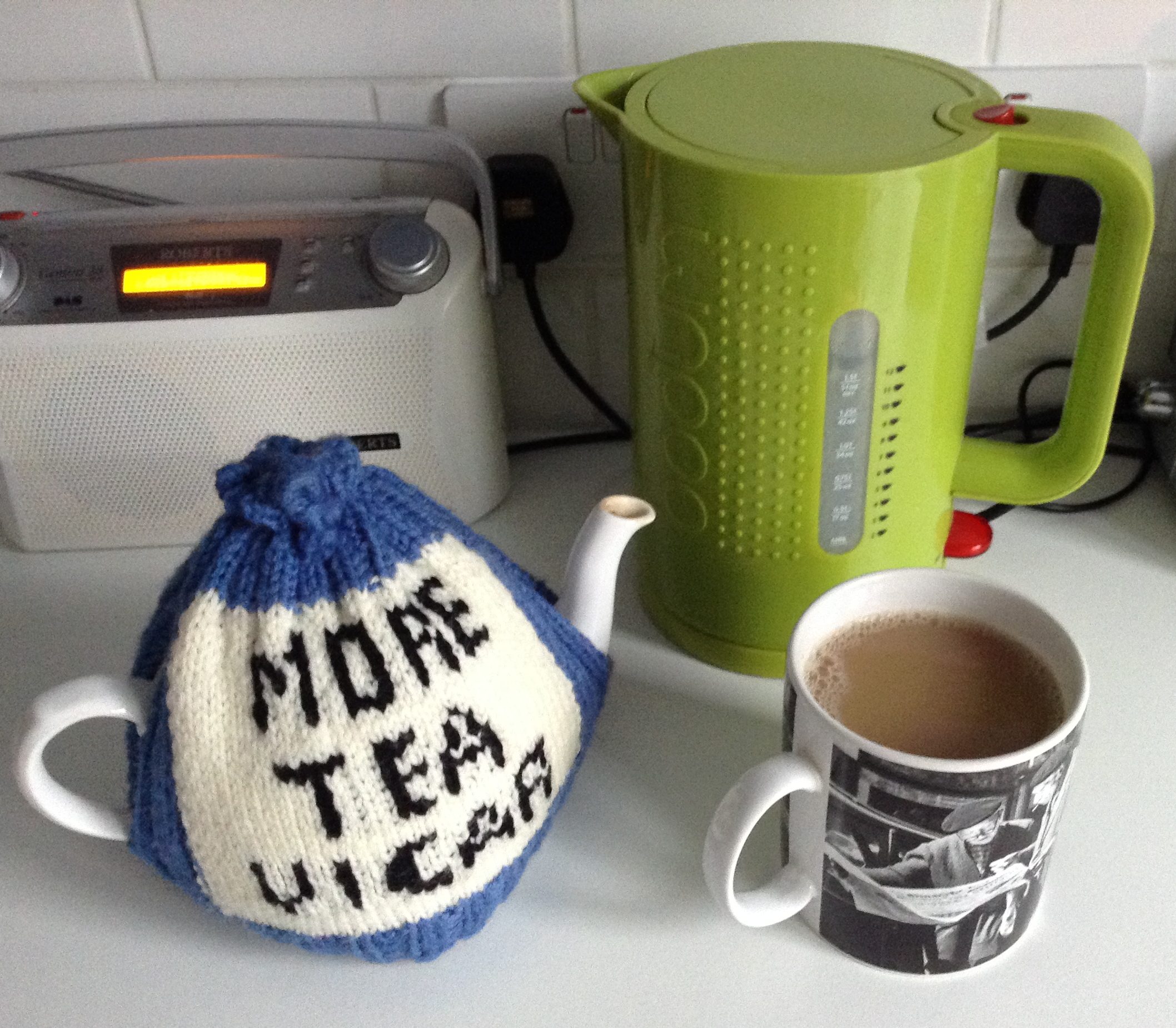
Choose ten albums that greatly influenced you. No explanations, just pictures of album covers. It sounds so simple, doesn’t it? Until someone asks you to do it, and then the fun really starts.
If you’re anything like me when faced with the prospect of doing something you haven’t done before, your first reaction will be a sinking feeling in your stomach mixed with a splash of panic. During those seconds before the rational side of your character kicks in, you’ll be reminded of a much more fundamental choice, hard-wired into all of us as a gift from our ancestors, that influences how we react in unfamiliar situations. If you haven’t already guessed, I’m a fully paid-up member of flight club and I just broke the first rule. Whenever I’m faced with awkward decisions, my gut instinct is to run as far and as fast as possible in the opposite direction. So it was when I was nominated to do the Ten Album Challenge.
Once the initial adrenalin rush had subsided, I was faced with the awkward decision of whether or not to accept the challenge. Revealing my taste in music is embarrassing enough at the best of times and coming up with a list of ten albums that greatly influenced me was way outside my comfort zone. It was also the latest in a series of similarly disturbing challenges circulating on social media at the time, urging me to reveal my life in books, pictures or whatever else the person who started the ball rolling happened to think of. On top of that, I was supposed to share the love by nominating someone else to do the same thing. While we’re on the subject, don’t get me started on that recipe exchange doing the rounds a few months ago, whose instructions were so elaborate that I gave up after the third attempt to work out what I was supposed to do. More importantly, if you think I’m sharing my secret for making Neapolitan-style Angel Delight with anybody else, you’ve got another thing coming. The people who dream up these challenges remind me of Eris (the Greek goddess of strife) who spiced things up at the wedding of Peleus and Thetis by throwing a golden apple labelled “For the most beautiful” into a crowd of unsuspecting guests who were just trying to have a good time, causing a commotion which led to the fateful Judgment of Paris and ultimately the Trojan War. At school, they were the ones who wrote chain letters and started those games which involve someone whispering something in your ear and then telling you to “pass it on” otherwise you’re “it”. These people are definitely in fight club.
Whilst pondering whether or not to accept the challenge, I thought about the brief and whether I could fulfil it. Ten albums that “greatly influenced” me. What did it even mean? Why couldn’t it just be ten albums I really liked or which I associated with significant moments in my life? Perhaps that’s all I was really being asked to do. Even then, it would be a tall order if I wanted to avoid public humiliation. The overriding image in my mind was of a group of earnest musos, rather like the gods on Mount Olympus, relishing the opportunity to demonstrate their superior knowledge of obscure music, whilst sneering condescendingly at the feeble efforts of those lesser mortals floundering about below, whose taste in music would be dismissed as “mainstream”, “commercial” or (worst of all) “derivative”. It’s a club I’ve never fancied joining and, as with all of the other clubs from which I’ve been excluded in one way or another over the years, one which is ripe for being ridiculed. I decided to accept the Ten Album Challenge, but I was going to do it my way. For starters, I wasn’t going to nominate anybody else and I was going to explain my choices (not at the time, but definitely at some point in the future). Perhaps most importantly though, as a dedicated member of flight club the greatest influences in my life have often been things I’ve been trying to escape in one way or another, and much of my taste in music follows a similar pattern. After all, who said you necessarily have to like the music that influenced you?
Album 1: Are You Experienced, Jimi Hendrix

Are You Experienced is one of the albums my brother listened to religiously when we were kids. Ever mindful of his responsibility to educate me in matters of good taste, he would play it at full blast whenever our parents were out, along with anything by a long list of bands including Deep Purple, Led Zeppelin, The Doors, Black Sabbath and The Rolling Stones.
If his mates came round, they’d drone on about the Friday Rock Show or the artwork on the latest concept album they’d purchased. To be fair, the music they liked was pretty good, but I perfected the art of dumb insolence at a young age and certainly wasn’t going to give them the satisfaction of telling them that. Disco, soul, funk and synth-pop were more my thing anyway. More significantly, they were the antithesis of “serious” rock music, along with just about everything else I have listened to ever since.
Album 2: Shape Up & Dance with Angela Rippon, various artists
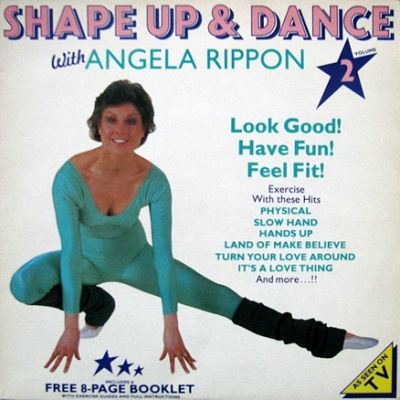
Shape Up & Dance with Angela Rippon epitomises the suburban domesticity of my upbringing, and the cosy village life of my mum and her friends which revolved around charity beetle drives, WI meetings, Crossroads and the golf club. It features a light exercise routine accompanied by sound-alike versions of racy pop classics.
Musically speaking, it’s rather like listening to a messed-up version of Top of the Pops, occupying a twilight zone between the Nine O’Clock News and Sale of the Century.
My mum wasn’t particularly interested in playing music at home whilst I was growing up, preferring to use the smoked plastic lid of the turntable on the music centre as something on which to display a houseplant. I’ve often wondered where I get my irreverent nature from and hope that the positioning of that houseplant was as much an act of rebellion on her part as an interior design statement. Shape Up & Dance with Angela Rippon is the only album I remember her buying and its effect on me cannot be underestimated. There are some things you can’t unsee, and my mum wearing a leotard whilst dancing about to “Physical” by Olivia Newton-John in front of a rust-coloured dralon sofa is definitely one of them. It’s a constant source of relief to me that she never bought Shape Up & Dance with Felicity Kendal.
Album 3: Golden Memories, James Last
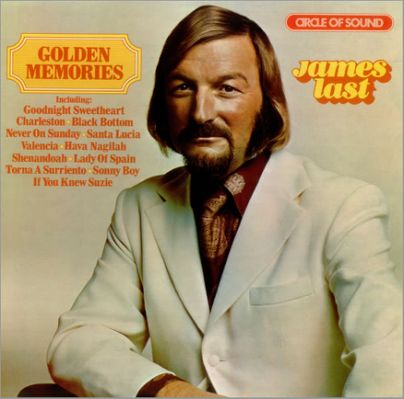
Golden Memories by James Last is one of the albums that my parents rolled out whenever they had friends round for a cheese & wine party. It sums up the watered-down glamour of 1970s suburbia that makes you want to pull on a pair of polyester slacks and take a swig from that bottle of crème de menthe at the back of the drinks cupboard.
Although I’m more than a little partial to a bit of easy listening (as to which see Album 10), James Last is definitely in 70s bad taste party territory for me; something that was amusing at the time but lost its appeal when I stopped being a student, along with the chocolate brown tank top with a beige whippet on the front that I bought for 50p from a charity shop in York. That said, I still have a penchant for ironically kitsch faux-glamour that can be traced back directly to exposure at an impressionable age to Bert Kaempfert, Herb Alpert & the Tijuana Brass and, of course, James Last.
Album 4: Top of the Pops, various artists
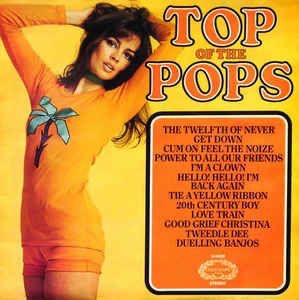
When my parents wanted to dial things up a notch by throwing a proper party involving my dad’s home brew and a spot of dancing, this was the album they would reach for. Of course, my brother and I would be packed off to bed at 7:30pm sharp when the first guests arrived and so I can only imagine the scenes of bacchanalian excess that followed.
The Top of the Pops albums were very much a product of the 1970s. Toe-tapping tunes for the masses packaged in a cheeky cover featuring a casually sexist picture. The lady’s charms were lost on me for reasons which became apparent a few years later, but I always appreciated her colour-coordinated outfit which, incidentally, was the same colour as my dad’s Morris Marina. In case you’re wondering, “Cum On Feel The Noize” and “Tie A Yellow Ribbon” don’t feature on my 70s playlist.
Album 5: The Messiah, George Frideric Handel
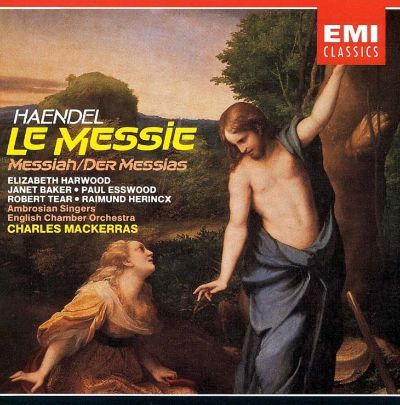
Since the early 1980s my family on my dad’s side have congregated for Christmas in London at my aunt and uncle’s house. The format has changed over the years, but this particular recording of The Messiah will always be played. It’s as much a part of Christmas for me as Carols from King’s, the Queen’s Speech, and sausage rolls and mince pies for breakfast.
When my granny was a young woman she used to sing, and by all accounts was a talented contralto, performing the same part as that sung by Dame Janet Baker in this recording. Despite being robbed of her singing voice in later life by throat surgery, The Messiah remained one of her favourite pieces. She was an immensely creative and resourceful woman, who these days would be allowed to express herself and achieve her potential. Instead she was held back by her upbringing and confined after marriage to expressing herself through her role as a wife, mother and grandmother. She was nevertheless the undisputed head of the family and my grandpa knew better than to cross her.
Whenever I listen to The Messiah I am transported to a cosy afternoon in my aunt’s drawing room during that strangely quiet and lethargic period between Christmas and New Year, sitting on the floor by the fire with whichever of the cats fancies basking in the warmth. My aunt is doing a crossword or a logic puzzle and my granny is sitting on the sofa with a glass of sherry and her knitting. Most importantly, I am reminded of two of the most significant influences in my life: my granny, a complicated and charismatic woman who wasn’t going to let her children or grandchildren be held back in the way that she had been; and my aunt, an educated and quietly assertive woman who happily indulges my love of biscuits whenever I pop round for lunch and has been a second mother to me since my mum died several years ago.
Album 6: Non-Stop Erotic Cabaret, Soft Cell
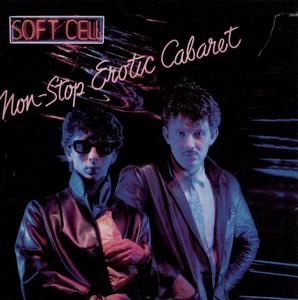
When Tainted Love reached Number 1 in July 1981, it featured on the local news programme. Soft Cell were from Leeds after all and news of a local band making it in London was a big deal in Yorkshire. I bought the single and looked forward eagerly to their debut album. It was quite an eye-opener and nothing at all like Tainted Love.
Non-Stop Erotic Cabaret is a sleazy album to put it mildly and certainly not something that my parents would have thought appropriate if they had known I possessed it. Quite apart from the playlist, which includes songs with titles such as Sleazy Films and Sex Dwarf, the front cover features a picture of Marc Almond with a package covered in brown paper tucked into the front of his leather jacket, next to Dave Ball who’s standing shiftily with his hands in his pockets. The back cover features the entrance to a peep show on a street in a red light district. If you’ve ever been made to feel different because of the way you look or behave, you’ll generally either try to change yourself so as to fit in and be accepted, or reject whatever it is that makes you feel excluded and take pleasure in being different. I’m definitely in the latter camp. Non-Stop Erotic Cabaret speaks of public virtue and private vice, alternative lifestyles and counter-culture. It is anything but mainstream. It was another dirty secret that my parents didn’t need to know about and I absolutely loved listening to it.
Album 7: The Draughtsman’s Contract, Michael Nyman
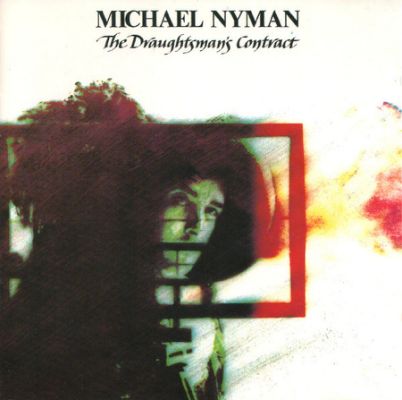
The Draughtsman’s Contract is my favourite film. Produced by Channel 4 Films and shown on Channel 4 shortly after it was launched in 1982, it was my first taste of arthouse cinema and one of a long list of Films on 4 that I watched on Wednesday nights at 9pm on a recently-acquired black and white portable television that was kept in my bedroom.
In those days, Channel 4 had a somewhat alternative reputation, providing a glimpse of the kind of life I wanted to lead, in which independent cinema and programmes with sub-titles were the norm. My dad generally disliked it and found much of its content too “trendy”. I remember him once losing his temper when he heard someone say “fuck” during a programme, shouting that if he heard it once again, Channel 4 would be banned in the house. From that point onwards if my mum, brother or I wanted to watch anything on Channel 4 we’d either have to watch it in my bedroom or anxiously hope against hope that no-one said “fuck” during anything we were watching whilst my dad was in the living room.
Directed by Peter Greenaway, The Draughtsman’s Contract is a surreal costume drama set in Restoration England, which tells the story of a young draughtsman employed to draw a series of pictures of a country house, ostensibly as a birthday present from the mistress of the house to her husband. The process of producing the drawings causes him to become enmeshed in a web spun by the mistress of the house and her daughter, who manipulate him into witnessing various goings-on while the husband is away on business, the drawings serving as evidence of his whereabouts at crucial points throughout the film. It’s a story of intrigue, manipulation and the relationship between what the artist paints and what the viewer sees. The soundtrack by Michael Nyman is a minimalist piece composed specifically for the film and based on the music of Henry Purcell. I love everything about the film, from the sumptuously beautiful cinematography and soundtrack through to the intricately woven plot and the witty dialogue which ties you in knots as you try to keep up. The fact that the film was like nothing I had seen or heard before, and was exactly the kind of thing that my dad would dismiss as a pretentious waste of licencepayers’ money, only added to its appeal.
Album 8: Stop Making Sense, Talking Heads

This album reminds me of lazy days as a student in Brussels while on my year abroad, as well as the Duke of York’s, the independent cinema in Brighton where I saw Stop Making Sense as a double bill with something like Diva or Subway. I was introduced to Talking Heads by my mate Julie who occupied the room across the landing in the house where we lived.
Julie had a Fender Stratocaster on which she spent most of the year trying to perfect the bass line from Burning Down The House. She was studying History of Art with French and was writing a dissertation about a place in Flanders called Sint-Martens-Latem where most of the Belgian expressionists spent time either working or living. We hired a car to drive there for a research trip one day with my other mate Sarah who was doing the same course as me. Sarah did the driving and Julie was in charge of the music. I remember listening to Stop Making Sense pretty much non-stop there and back.
Album 9: Island Life, Grace Jones
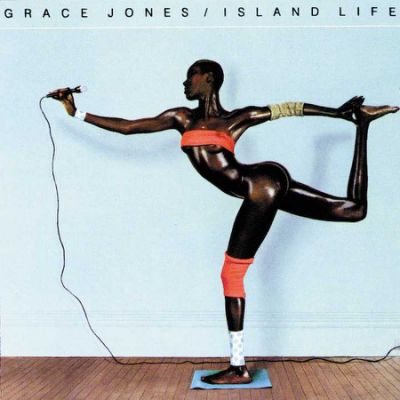
I saw Grace Jones for the first time in the early 1980s whilst watching The Tube, Channel 4’s Friday night music programme. She was like nothing I had ever seen before, having undergone the image revamp masterminded by Jean-Paul Goude that was going to define her style from that point onwards. I found her powerful and androgynous looks strangely fascinating.
Slave to the Rhythm was released a year or so afterwards. It was the anthem of my first term at university. More recently I saw Grace Jones in concert at the Albert Hall in 2010. She sang La Vie En Rose wearing an enormous red dress that turned out to be completely backless. If that’s not an encouragement to accept yourself for what you are and live your life without caring what others might think, I don’t know what is.
Album 10: “You’re always welcome at Club Montepulciano…”, Montepulciano House Band
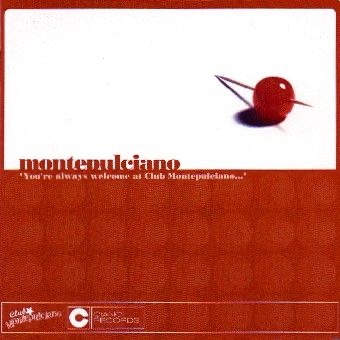
Club Montepulciano was a cabaret club forming part of a wider music scene in the 1990s referred to as loungecore, which featured 1950s and 1960s easy listening classics. Both the music and the club fitted in with my love of James-Bond-style cocktail and casino culture and provided an outlet for a slightly disturbing penchant for ironically kitsch faux-glamour that I developed as a child.
I used to visit Club Montepulciano with mates of mine known on twitter as @CrimBarrister and @DrMcWeb. The club generally took place in the Rivoli Ballroom, a Grade II listed building in Crofton Park in South London, although I remember it also popping up at the Winter Gardens in Eastbourne, a fantastic basement club somewhere on Tottenham Court Road and the infamous Eve Club on Regent Street. Club Montepulciano was fronted by a man called Heilco van der Ploeg who acted as a compere for the evening, crooning a couple of numbers and introducing whatever acts had been booked for the cabaret. Initially, I thought that it was a stage name, intended to complement that of Cha Cha D’Amour, the glamorous in-house artiste who appeared each month wearing a floor length gold lamé dress with black evening gloves to sing songs such as “Petit Déjeuner” and “Peaches and Cream”. It turned out that Heilco van der Ploeg was his real name and I always hoped that Cha Cha D’Amour was her real name too. Needless to say, patrons were expected to dress up. My favourite outfit was a black velvet dinner suit with bell-bottomed trousers and a built-in cummerbund that I bought for £80 in a vintage shop and wore with a black velvet bow tie and a pink shirt with a ruffle down the front. Club Montepulciano was cheesy and camp, alternative in a gentle and everyday kind of way. It was hilariously good fun. I suspect that the humour for most people was entirely ironic. In my case, however, I used the irony of dressing up and looking a bit like Eric Morecombe in a pair of faux tortoiseshell glasses to hide a darker secret: I genuinely enjoyed wearing a black velvet dinner suit with bell-bottomed trousers and a built-in cummerbund. It’s still waiting patiently in my wardrobe, along with a vintage safari suit and a couple of hawaiian shirts. After all, it knows as well as I do that it’s only a matter of time before I find an excuse to slip it on once again.

 What I learned today...
As ever brilliant, I won’t talk about flight club, loved Herb and the Tijuana boys too, sex dwarfs appropriately decadent, very much e joyed reading your blog again.
I still haven’t seen the draughtsman’s contract, your description hear sealed the deal that it’s devoir. Desperate too see how pretentious and whether the licence payers money of the time was wasted.
Dumb Insolence, was also my forte, far more than my piano ever could be.
As ever
Craig
LikeLike