Despite having a fairly vivid imagination, I’ve never thought of myself as a creative person. A practical and conservative upbringing instilled at a young age not only a strong sense of my place in the world, but more significantly how I was supposed to make my way in it. It also instilled a view of creativity which was confined to “serious” forms of art, music and literature requiring a minimum level of skill or expertise (anything else being at best “creative” in the pejorative sense of the word and dismissed accordingly). My great grandfather was a coal miner. My grandfather was an accountant. While I was free to do as I wanted, the direction of travel and the expectations were clear. Given that I can’t sing or dance for toffee, was never much good at any of the musical instruments I tried to play at school, and am so bad at drawing that the idea of playing Pictionary makes me more than a little anxious, creativity was definitely not the stuff that careers were made of, nor did it form the basis of particularly enjoyable pastimes. My mum and granny might have described me rather euphemistically as “sensitive” or “artistic”, but that’s as far as it went.
Over time, once I started mixing with people whose background and perspective on life were different from my own, I realised that there was a lot more to creativity than I had previously thought, and that (for me at least) it boils down to a willingness to embrace different ways of expressing ideas, feelings and emotions, as well as the unlimited possibilities which that presents. Whilst this opened my mind to all sorts of creative pursuits and instilled an admiration for anyone with the confidence and ability to express themselves through what they do, it also made me acutely aware of my own creative shortcomings. Despite not thinking of myself as creative, I’ve always felt a need to express myself; a feeling that something inside me is trying to get out, mixed with frustration at my inability to work out what it is and how to articulate it. When creativity is viewed as a form of expression, to say you are not creative is essentially to deny that you have a voice or anything worth saying, and it’s taken me a long time to realise that this is what was really going on whenever I said it. If you’ve watched Jurassic Park you will probably remember Jeff Goldblum uttering the words: “Your scientists were so preoccupied with whether or not they could that they didn’t stop to think if they should”. In my case, I was so preoccupied with whether or not I should that I didn’t stop to think if I could. Creativity for me, therefore, is really about finding my voice and giving myself permission to use it.
Apart from a couple of years spent in-house as one of the lawyers for Sotheby’s, which involved a working environment that was alternative to put it mildly, I received very little, if any, creative satisfaction as a practising solicitor. Whilst in private practice, I was in the Commercial department of a large City law firm, drafting and reviewing the small print on the back of loan and credit agreements, and scrutinising portfolios of credit card and mortgage agreements in the context of structured finance transactions known as securitisations (don’t ask). Writing letters of advice on the finer points of the Consumer Credit Act 1974 might require an ability to express ideas and concepts clearly and succinctly, but it’s hardly an imaginative or playful use of language, and inevitably I’d leave the office each day feeling fairly empty inside. Visits to galleries and cinemas at the weekend provided temporary respite from the artistic and cultural vacuum I worked in from Monday to Friday, but they did nothing to satisfy any creative longing that might have been lurking in my subconscious.
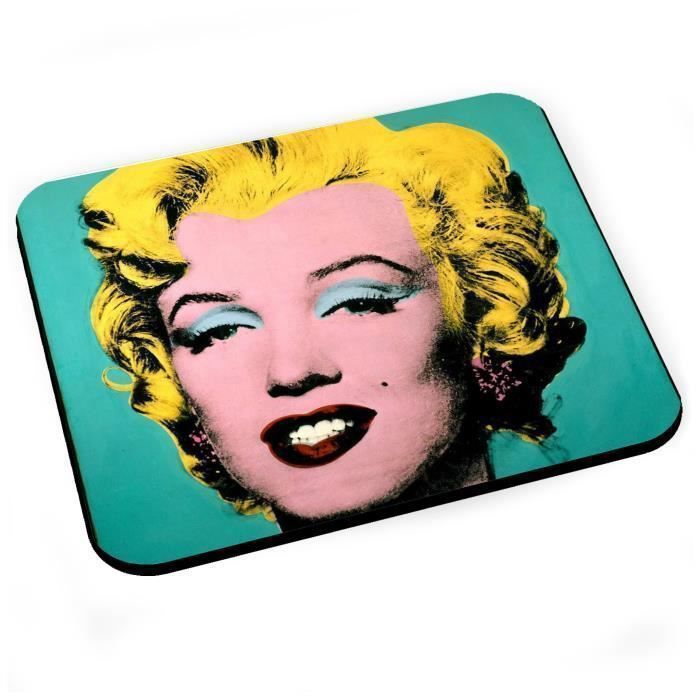
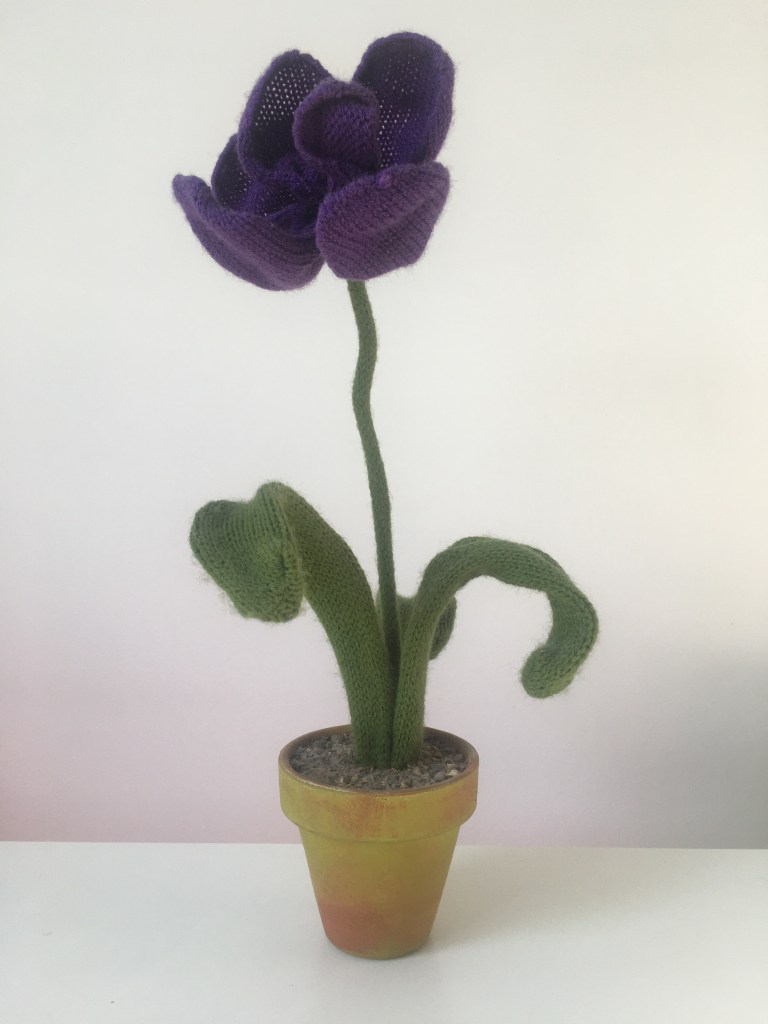
Initially, my sense of creative frustration expressed itself through a rather fierce assertion of individuality; deliberately rakish ties, a rather loud mouse mat featuring an image of Marilyn Monroe by Andy Warhol, and a knitted house plant (purchased from a stall in Camden Market) displayed proudly on my desk. I also went through a phase of keeping my cash, credit cards and security pass in a small purse made of teddy bear fur that was red on one side and lime green on the other, ostentatiously putting it on the table in front of me during client meetings or on the reader by the turnstile when entering or leaving the building. My job was a source of income rather than professional satisfaction and I wasn’t going to let anybody think otherwise, nor was I going to be defined by it. I did not live to work, at least not in my mind, but the chargeable hours I clocked up suggested otherwise.
The overall intention was to amuse rather than shock, although I can’t deny gaining enjoyment from ruffling the feathers of the odd self-righteous partner by going against the grain. If the head of the Banking department at the firm where I was a trainee solicitor didn’t tell me off for wearing a tie that was “too West End” I’d feel that something was wrong. I remember going on a three day residential course as a mid-level associate, designed to weed out those with partnership potential, which involved being scrutinised almost constantly by an observer whilst doing various group activities and then being given painfully detailed feedback on my performance. One evening after dinner, I got chatting to one of the observers who remarked that I was very “aware” of my emotions and wasn’t “afraid to express them”. Initially I thought that she saw this as a positive thing, but was brought back sharply to reality when she smiled at me with a rather puzzled look on her face and asked me why I was a lawyer. I think she was trying to be kind, but it was chilling to put it mildly, and made me realise that however well I did my job, toed the line and watched what I said, ultimately I would never fit in. On the bright side, at least it confirmed that I definitely wasn’t partnership material and that I was more than capable of expressing myself emotionally, if not creatively. As time went on, I started to feel an increasing sense of irritation at the intangible nature of everything I produced, and a desire to do something different from typing words on a screen (or at the very least, rather unimaginative ones related to law).
The biggest irony in all of this is that by today’s standards I come from quite a creative family. My granny was a talented singer, who had a natural ability to turn her hand to most handicrafts and was a phenomenal seamstress and knitter. She met my grandfather through the church where he was the organist. Her father (my great grandfather) was a joiner and church furnisher who carved pews and lecterns. He made a wardrobe, dressing table and bed for her as a wedding present, not to mention a dining table, a side board and various other bits and pieces. Of course these talents were considered practical rather than creative. More to the point, they were used to produce things to a very high standard, meaning that anything less than perfection wasn’t an option.
One of my most vivid memories of my granny is of her knitting and crocheting almost constantly. I remember watching in amazement as she pinned material to patterns, cut the pieces out, and then sewed everything together. She also had a knitting machine that was totally fascinating. My granny was an intelligent woman, held back by not being allowed to go to university or even to have a career after she was married, who expressed herself instead through those creative talents. The undisputed matriarch of the family, she wasn’t going to let her children or grandchildren be held back in the way that she had been, meaning that the only measure of success as far as she was concerned was a university education and a proper career. Anything else, whilst tolerated, would ultimately be failure. Rather ironically, the value that she placed on academic achievement above all else perpetuated the restrictive view of creativity which formed an important part of the environment in which I grew up, converting academic frustration into creative frustration in the process.
Upholstery
Fast forward a few years to me trying to come up with ideas for a creative outlet. My initial thought was some sort of tailoring course, bearing in mind my granny’s abilities with sewing and knitting needles. Even though I never got the hang of crocheting, and my knitting abilities are limited by the fact that I am a left-hander who was taught to knit right-handed, the thought of sewing things together has always intrigued me. On reflection, however, it struck me that tailoring is something you need to do for quite a long time before you see much by way of the fruits of your labour and I wanted more instant creative gratification. I racked my brains some more and hit upon the idea of upholstery. It’s practical, creative and it involves sewing, so it ticked all the boxes. More importantly, there was an upholstery school about a ten minute walk from my flat, running intensive week-long courses as well as evening classes. I booked myself in for an intensive modern and an intensive traditional upholstery course. Two weeks of using my hands and hopefully achieving something half decent. I couldn’t wait. Upholstery turned out to be everything I was hoping it would be, and more.
In case you’re wondering what the difference is between modern and traditional upholstery, it relates to whether the piece in question was produced before or after roughly 1945. Traditional upholstery employs materials and techniques that pre-date mass production and the petro-chemical industry, meaning that it’s all about natural fibres, horse hair stuffing and time-intensive hand sewing. Modern upholstery is all about foam rubber, man-made fibres, sewing machines, staple guns and pre-fabrication. Both are absolutely fascinating and great fun to do. By trying both, what I’ve learned is that while my aesthetic preference is for post-war 20th century pieces, my creative preference is for the traditional upholstery techniques.
My first project involved re-upholstering a battered 1960s office chair with a nasty green vinyl cover.
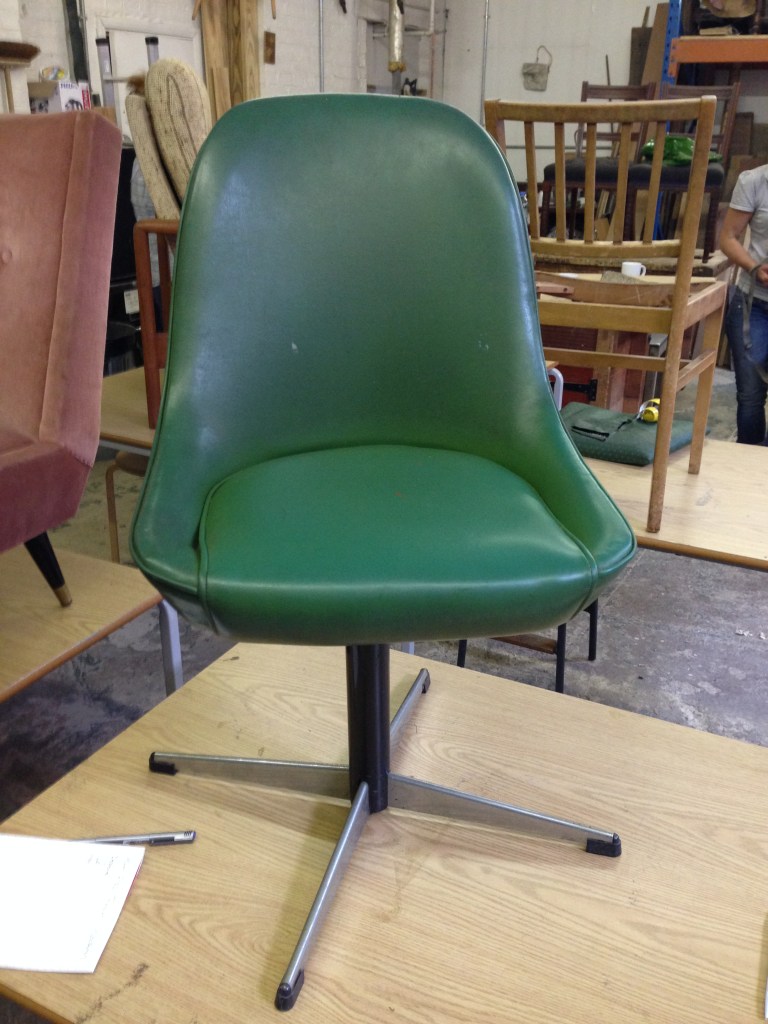
Initially I wanted to cover it with pale blue leather, but was steered skilfully away from this by my tutor, Sharon, who pointed out that this would mean using a scary industrial sewing machine. Twenty seconds with that beast made me realise that I was not ready to sew leather. As I sat there demoralised, Sharon pulled out a roll of rather fetching mid-blue, hessian-style material and I realised that all was not lost. A few days later, after quite a few hours spent cutting foam rubber (which you do Rocky-Horror-style with an electric carving knife), making a template for a cover that looked a little like a poncho without sleeves or anywhere to put your head through, and sitting hunched over a (much gentler) sewing machine, the chair was ready for its first fitting. After a few tweaks, it was ready to be stretched into place and stapled down. Here are some pictures of the sewing machine and Sharon exercising her right to be the first person to sit on the chair once the cover was on.
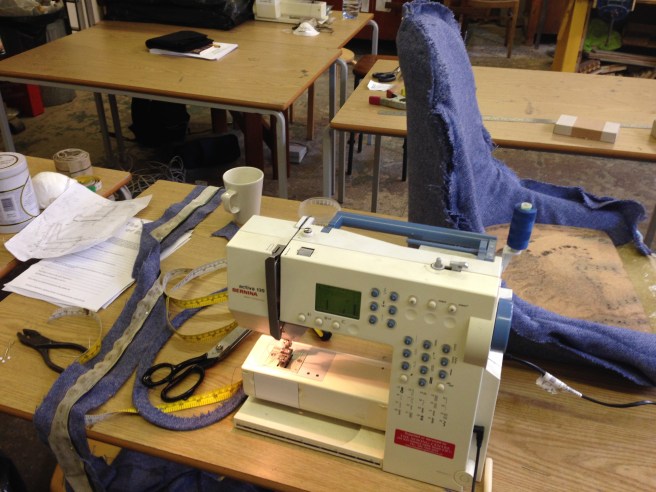
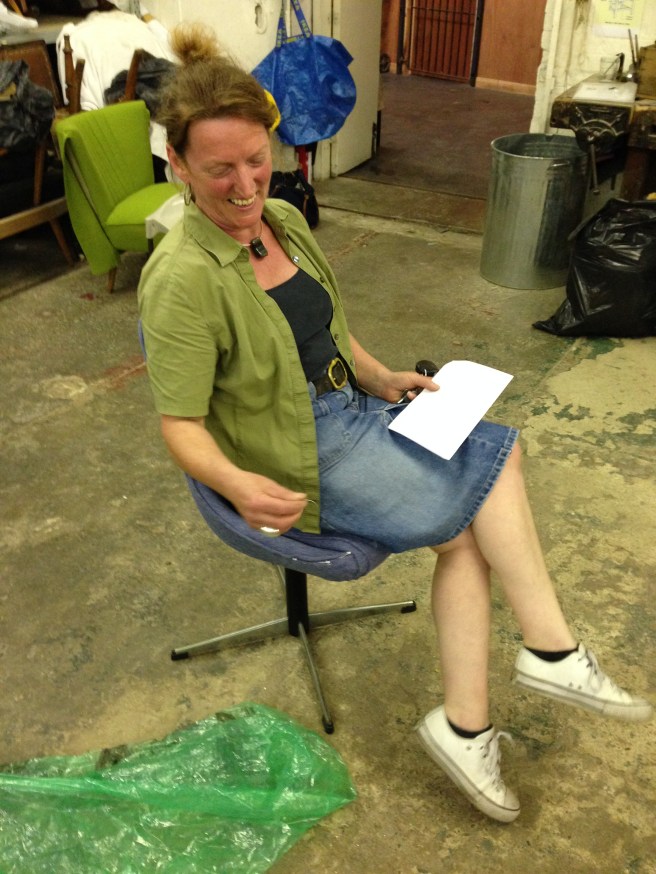
A couple of hours later, after a little bit of hand sewing at the edges to tie up some loose ends and finish everything off, the chair was ready to take home. It now sits in pride of place in my bedroom. I still can’t quite believe that I managed to produce that cover, and even less that it fitted pretty well first time.
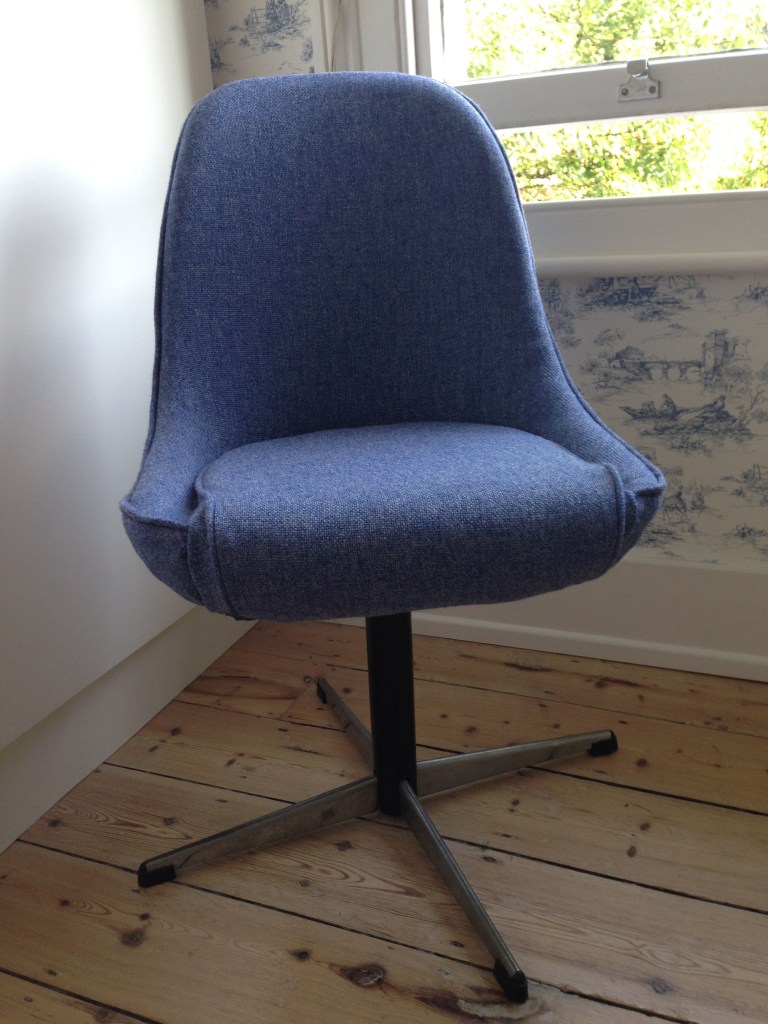
The course gave me the profoundest respect for anyone who can use a sewing machine. It required a ridiculous amount of hand-holding by Sharon for me to produce that cover. Quite apart from using the machine itself (which I really didn’t enjoy), the cover had to be sewn inside-out and back-to-front. Sharon and my granny made sewing stuff look easy. As far as I am concerned, anyone who finds it relatively easy to sew has a level of spatial awareness and dexterity that would probably enable them to land a space craft on the moon whilst blind-folded. It’s a skill I can only dream of possessing, and makes me wonder if my granny could have been an astronaut if she had been born at another time.
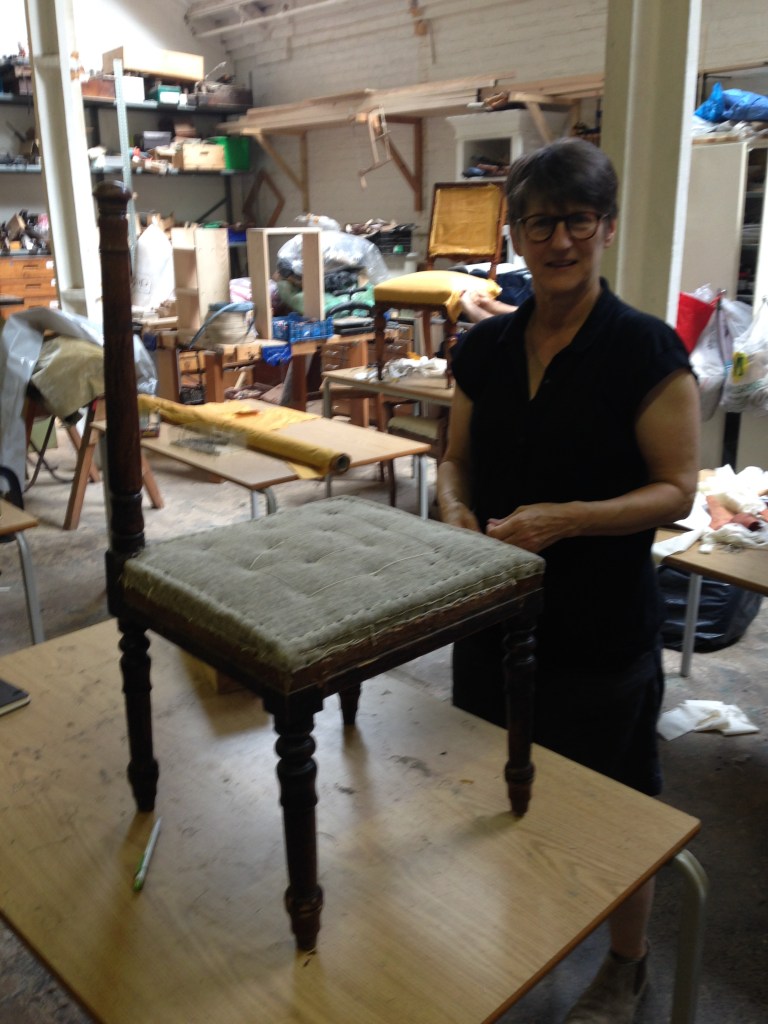
My second upholstery project involved an early 19th century bed step which needed to be stripped back and completely re-upholstered. Yes, you read that correctly: a bed step. Essentially it’s a stool designed to be used in order to step up onto a fairly high bed, with a handle on the side for you to hold onto whilst in transit. This took quite a lot longer than a week to finish, meaning that I had to enrol on an evening course and work on the bed step over the course of a couple of months. Here it is, looking a bit sorry for itself after being stripped and then clamped back together to sort out a wobbly leg. The pot on the table contains the most foul-smelling, fish-based glue.
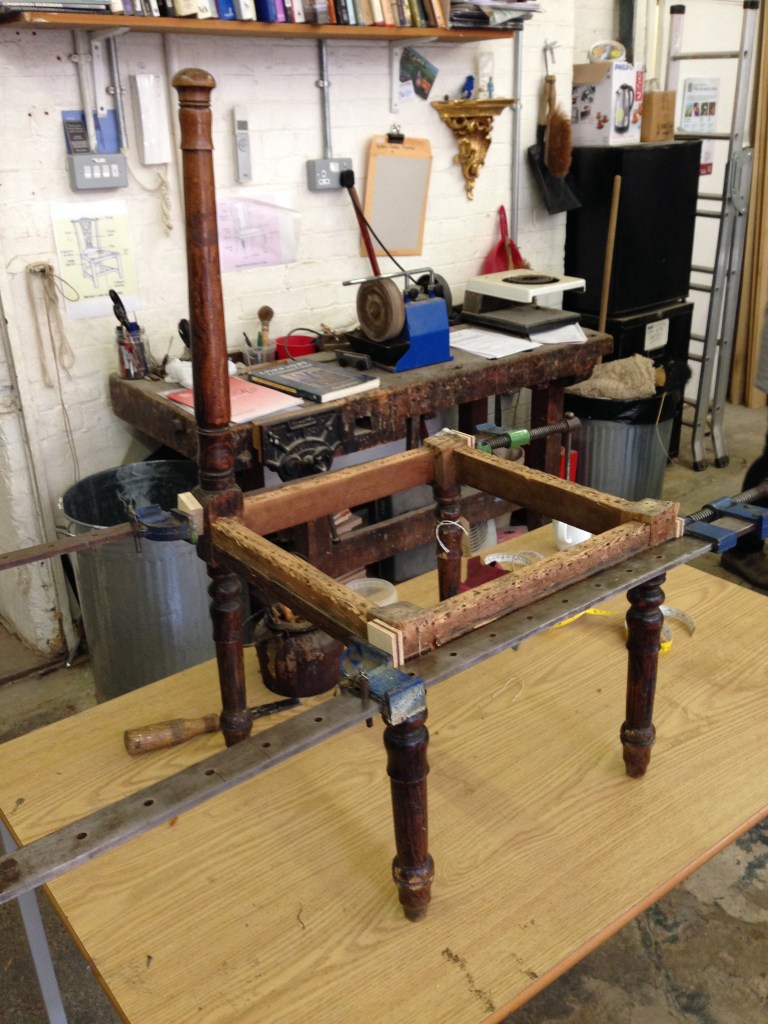
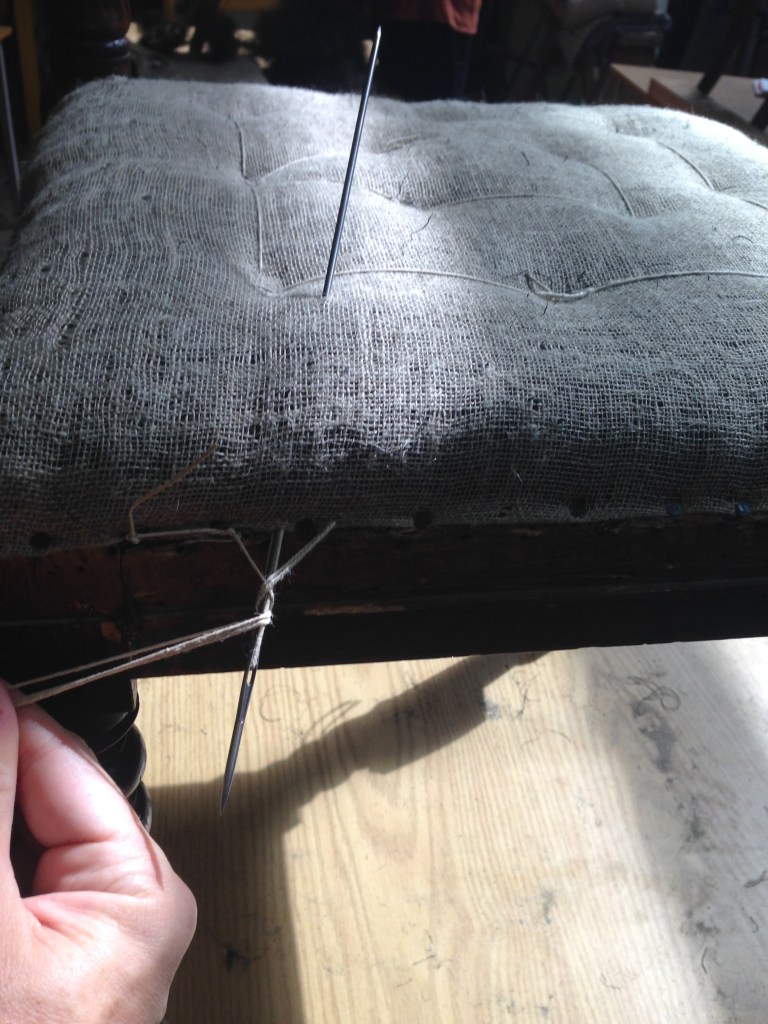
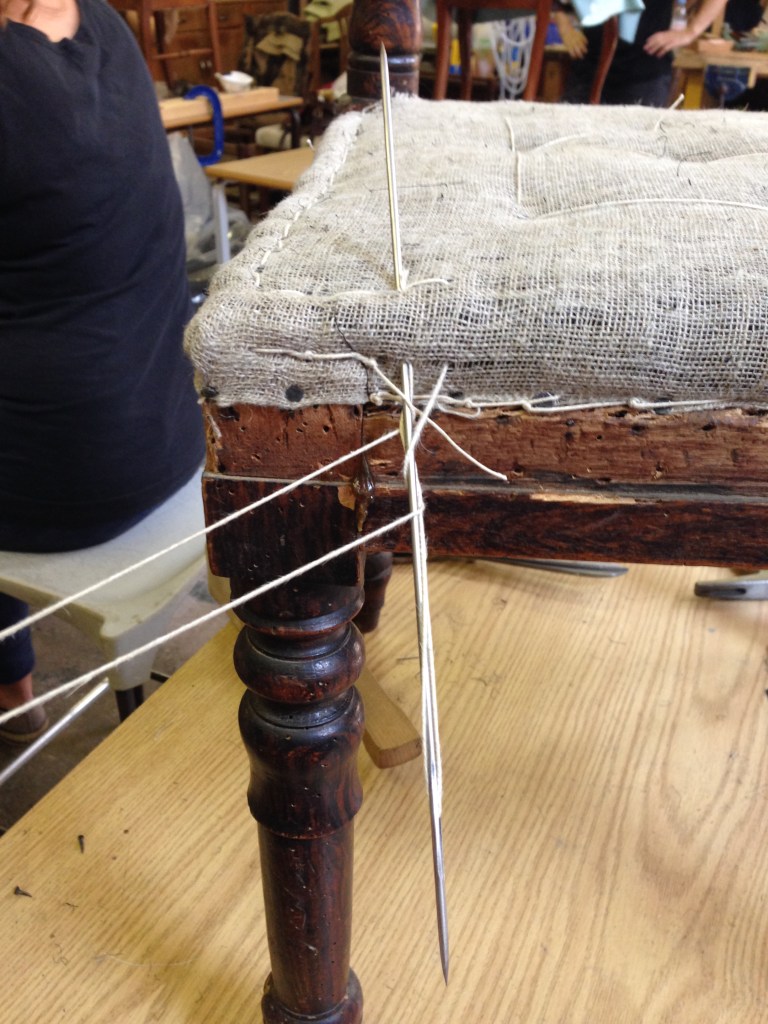
The techniques employed in traditional upholstery are much more time- and labour-intensive than for modern upholstery, reflecting the era when they were developed, before mechanisation and man-made fibres. As well as being more environmentally friendly, it’s much more peaceful and relaxing than modern upholstery. That said, it involves some frankly scary tools, such as the webbing stretcher which resembles a medieval torture instrument (especially the American version which has rather nasty metal teeth), and double-ended sewing needles that are about twelve inches long. The webbing is what forms the foundation for the different layers of stuffing and upholstery underneath the top cover, and has to be stretched until it’s as tight as a drum. The needle is used to sew the stuffing in place, to anchor the upholstery to the frame and then to create successive layers of stitches around the sides in order to construct a straight edge. Possible hazards include applying too much pressure and destroying the frame whilst stretching the webbing, stabbing yourself with the needle, and rubbing the skin off the sides of your fingers whilst pulling the thread tight (the thread is quite thick and rough, and has the capacity to cut into your skin like cheese wire if you wrap it round your fingers too tight as you pull it to form the stitch).
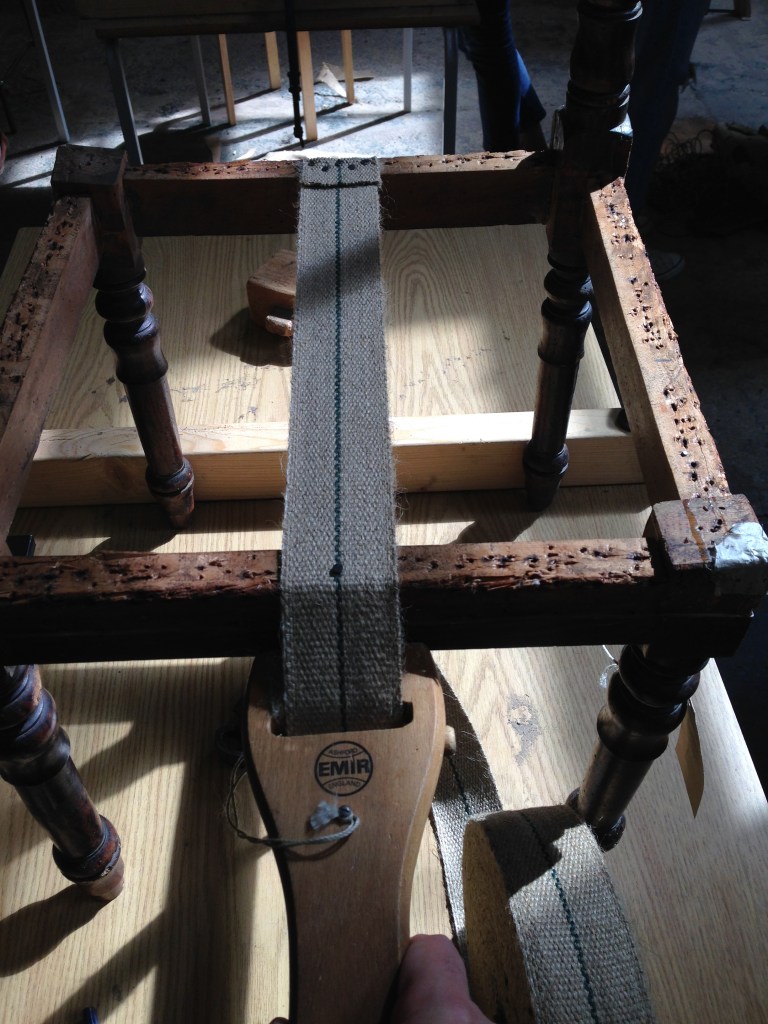
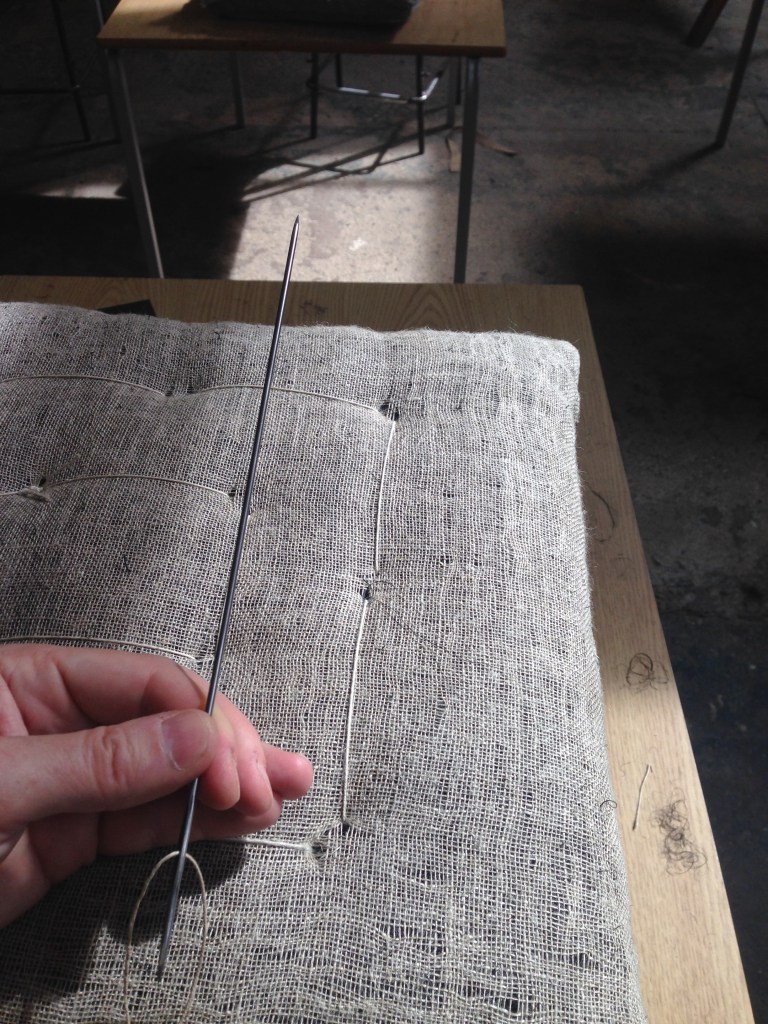
For me, the best bit is stitching everything down. It’s a curious technique which enables you to stitch the material on both sides without the needle having to go all the way through and out the other side as with embroidery or dressmaking. Once you get the hang of it, it’s incredibly relaxing to do. After more hours of stuffing, regulating (ie moving the stuffing around so that it sits evenly under a layer of linen called “scrim”) and stitching than I care to mention, you can see the bed step below next to Amanda, the tutor, ready for its final layer of padding and top cover.
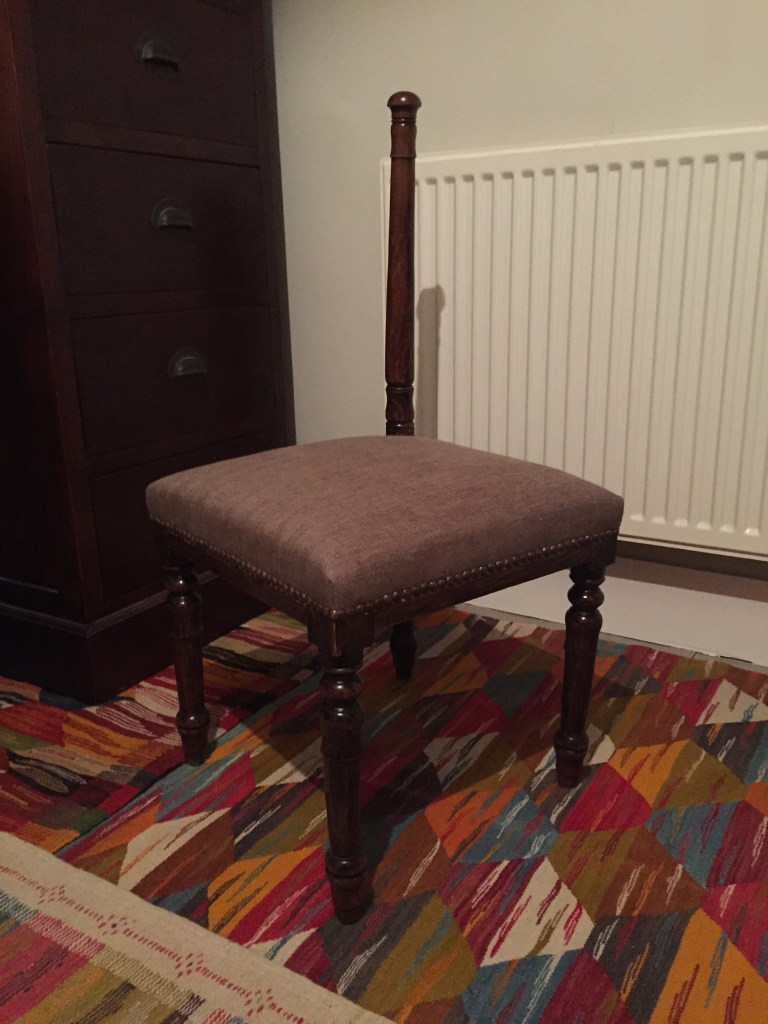
For the cover, I chose a rather fetching biscuit-coloured (no surprises there) tweed from a fantastic shop in Rye called Merchant & Mills. If you haven’t been, it’s the sort of shop that people with the fabric equivalent of a stationery fetish visit. To disguise the edges I went for a row of antiqued metal studs rather than gimp braid (yes, you did read that correctly), hammering my fingers quite a few times in the process as I knocked each one into place. The bed step now sits in pride of place in my spare bedroom.
My third project was a full-scale restoration and re-upholstery of a 19th century nursing chair belonging to my downstairs neighbour, requiring the mending of a broken leg, new springs, stuffing and a buttoned back. It took about 18 months to complete.
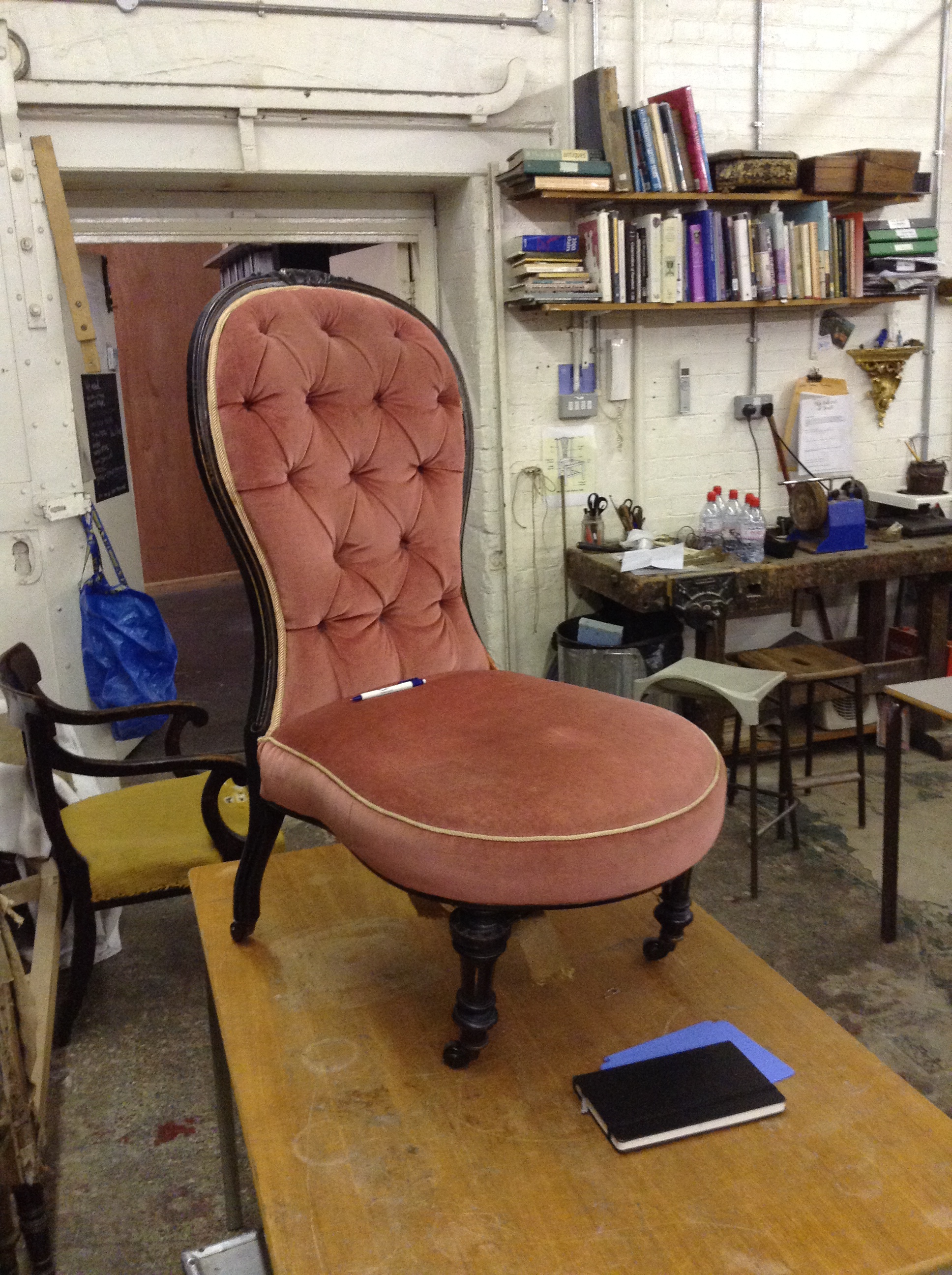
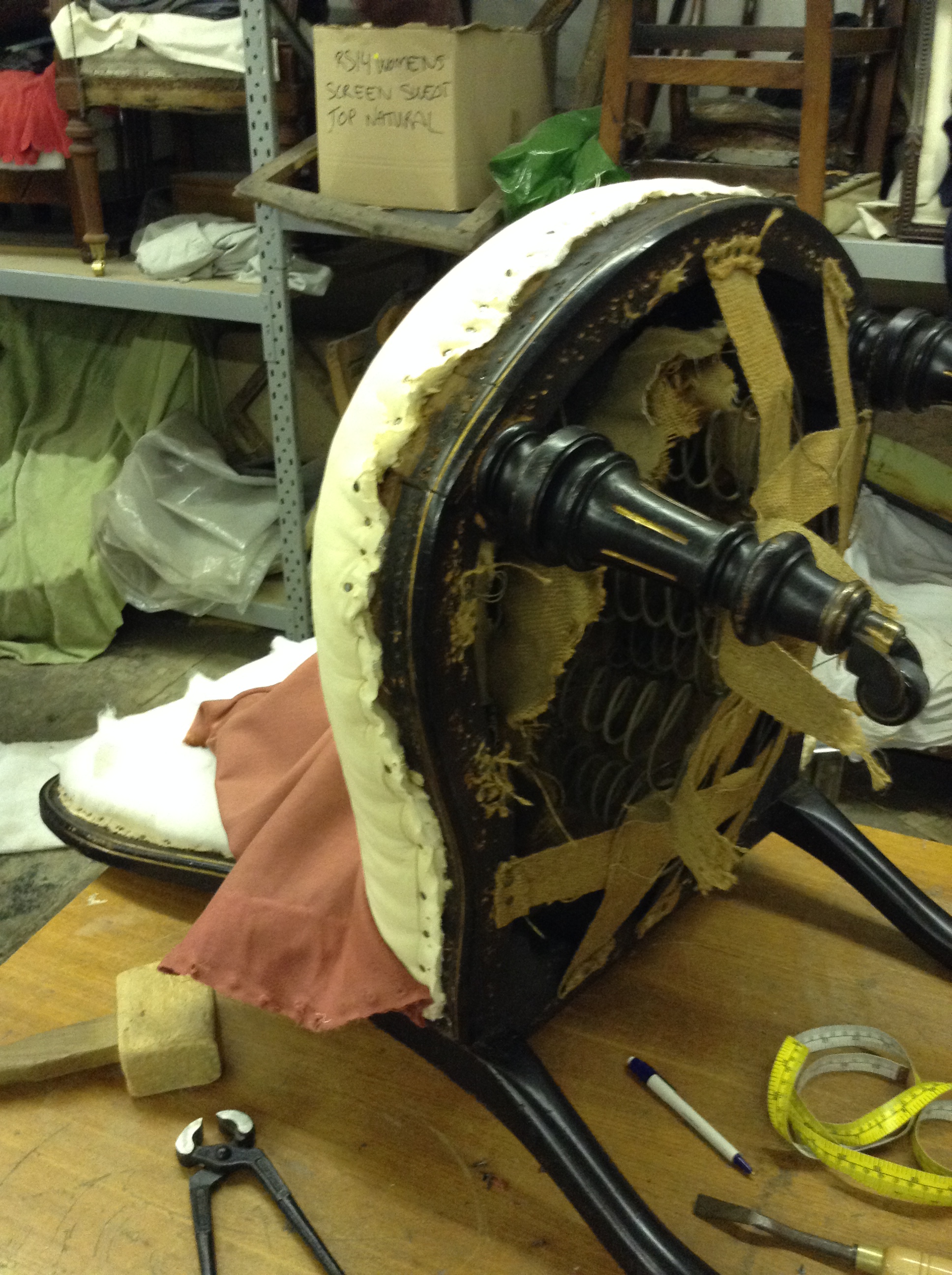
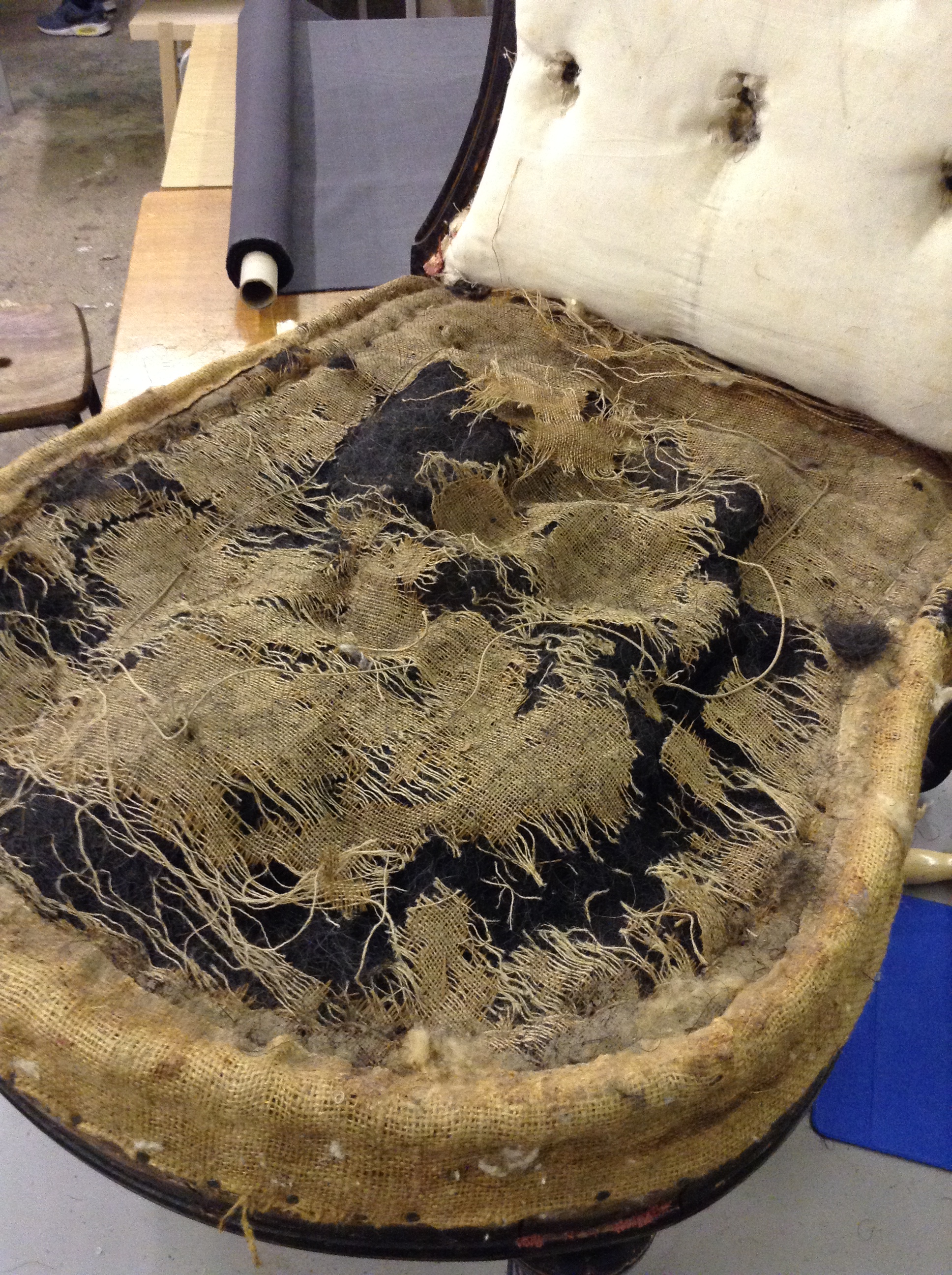
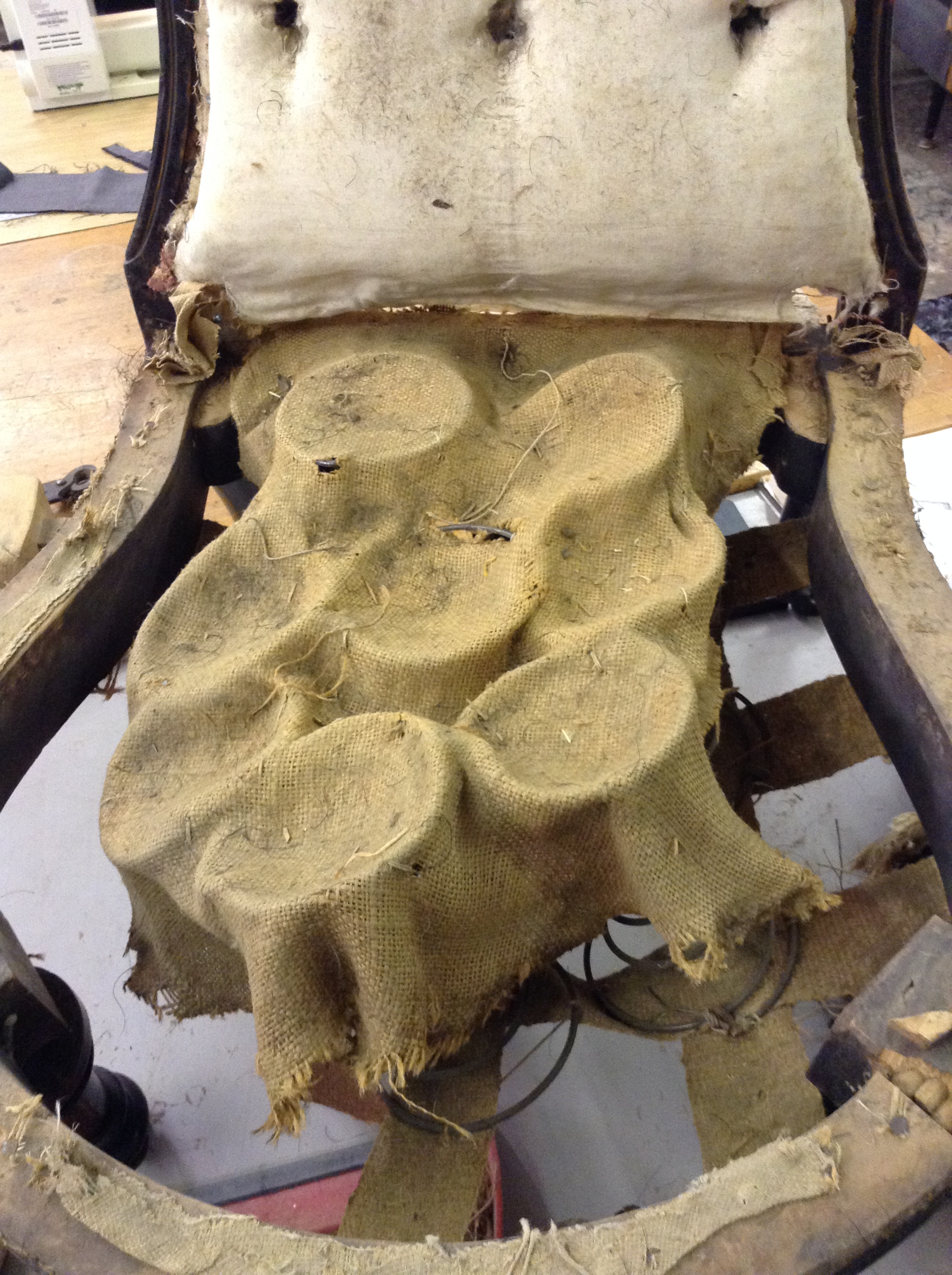
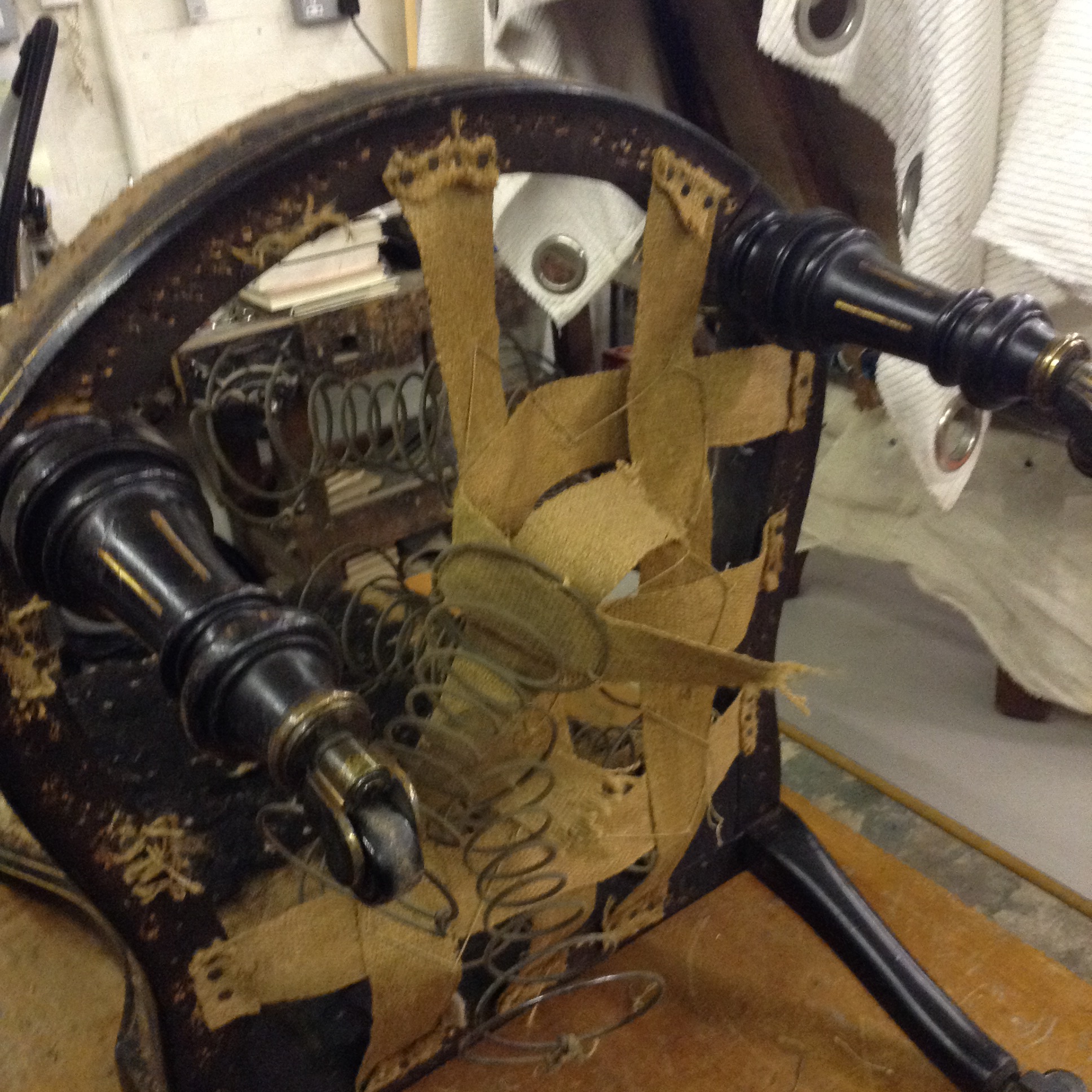
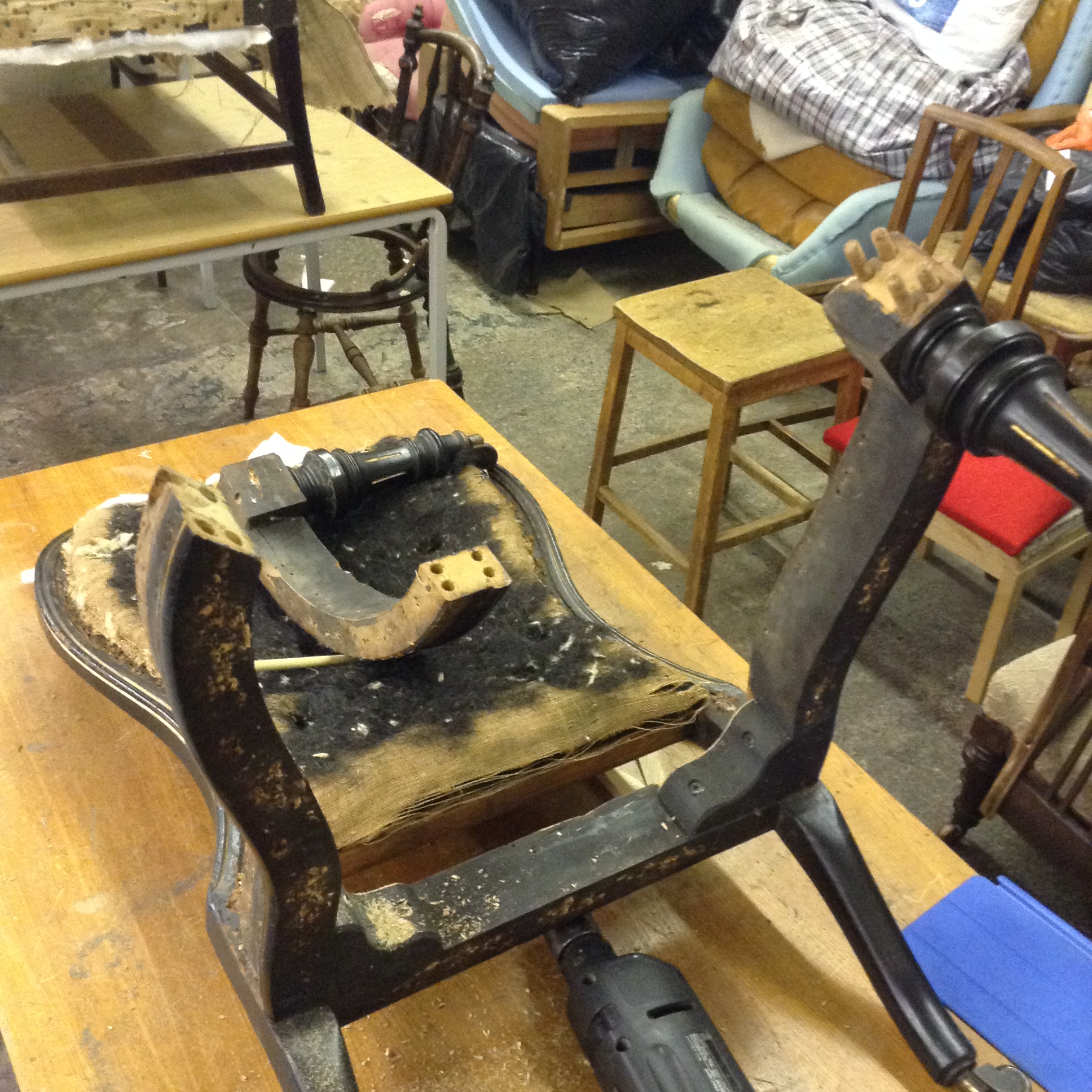
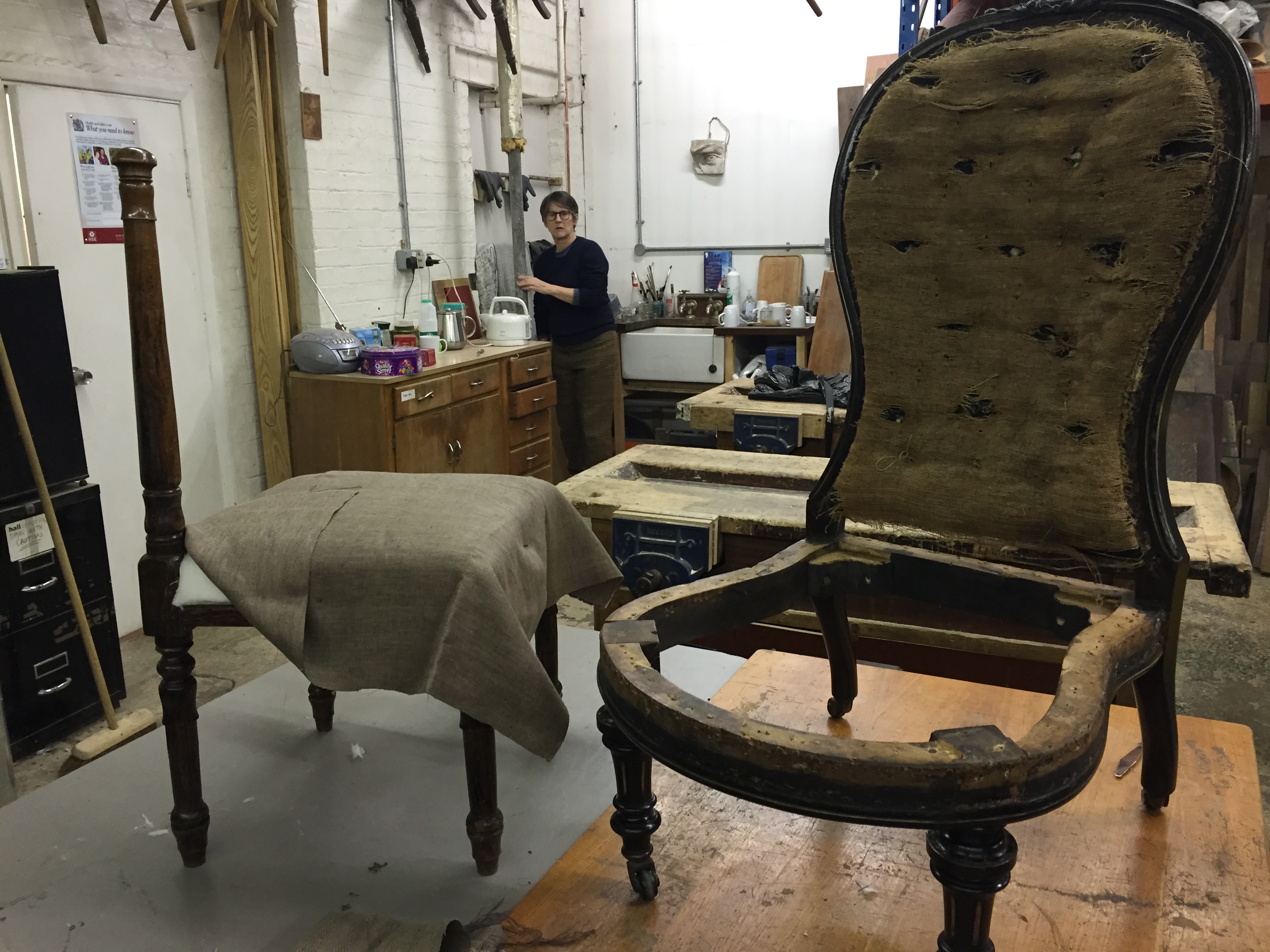
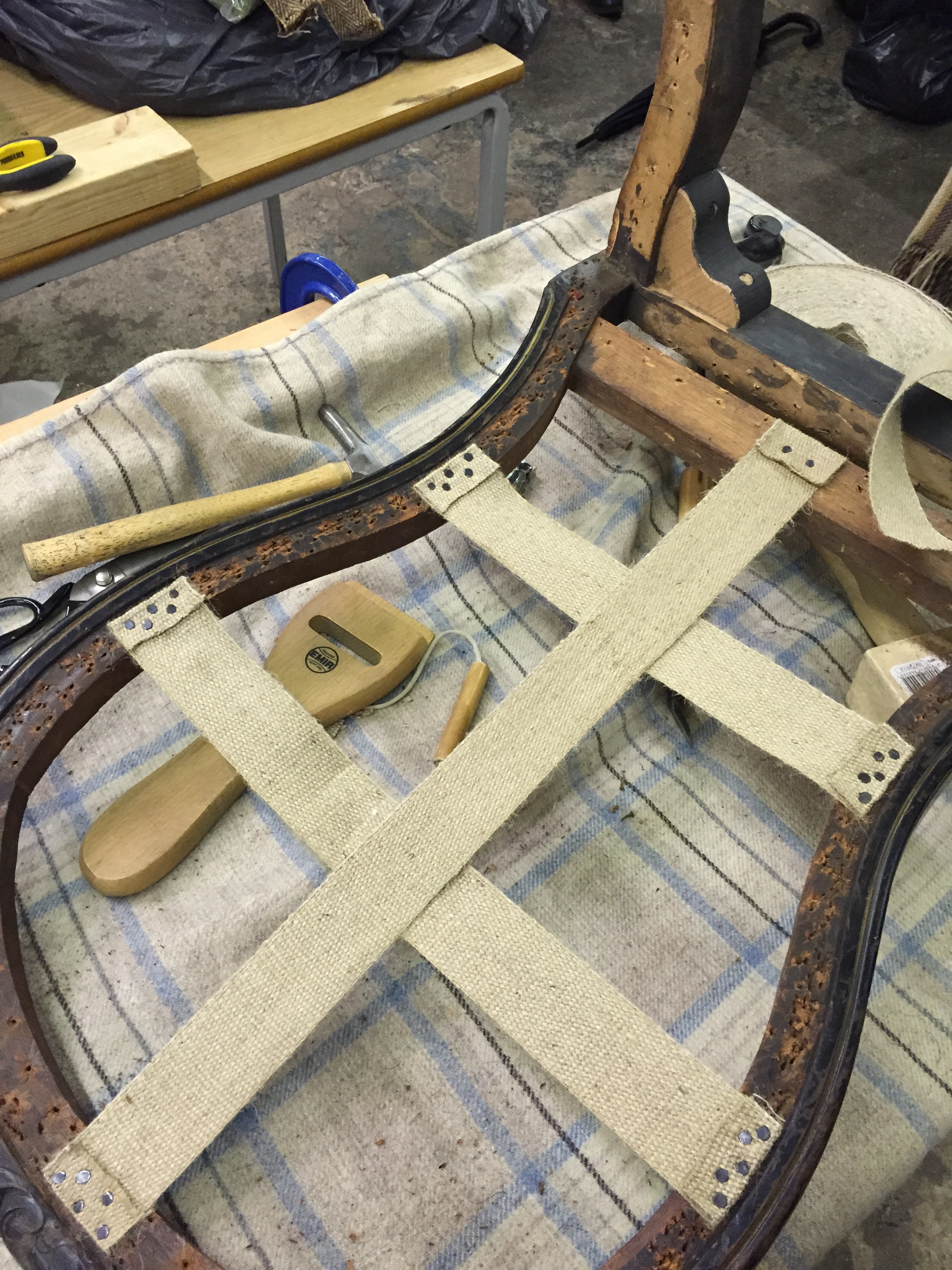
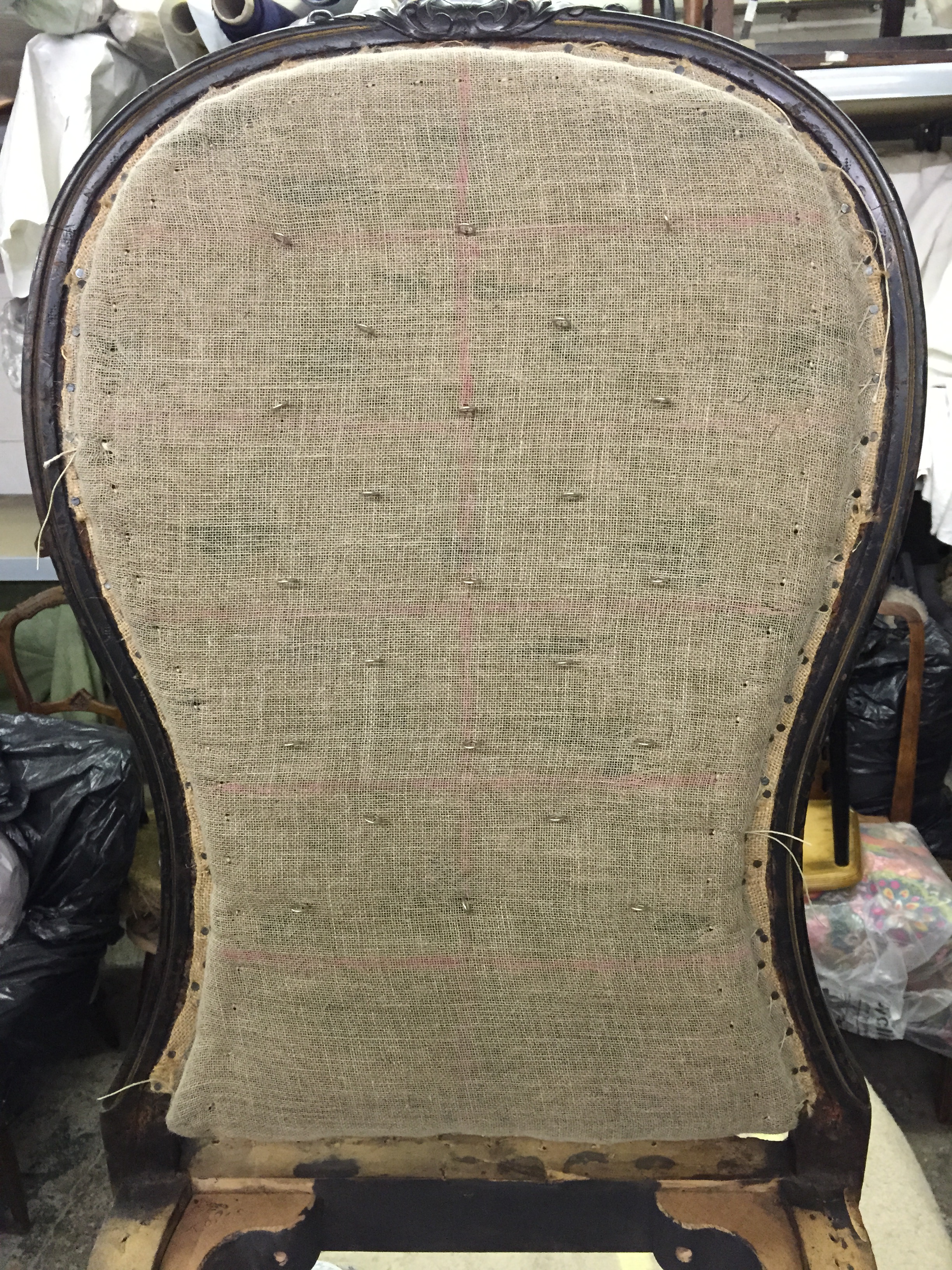
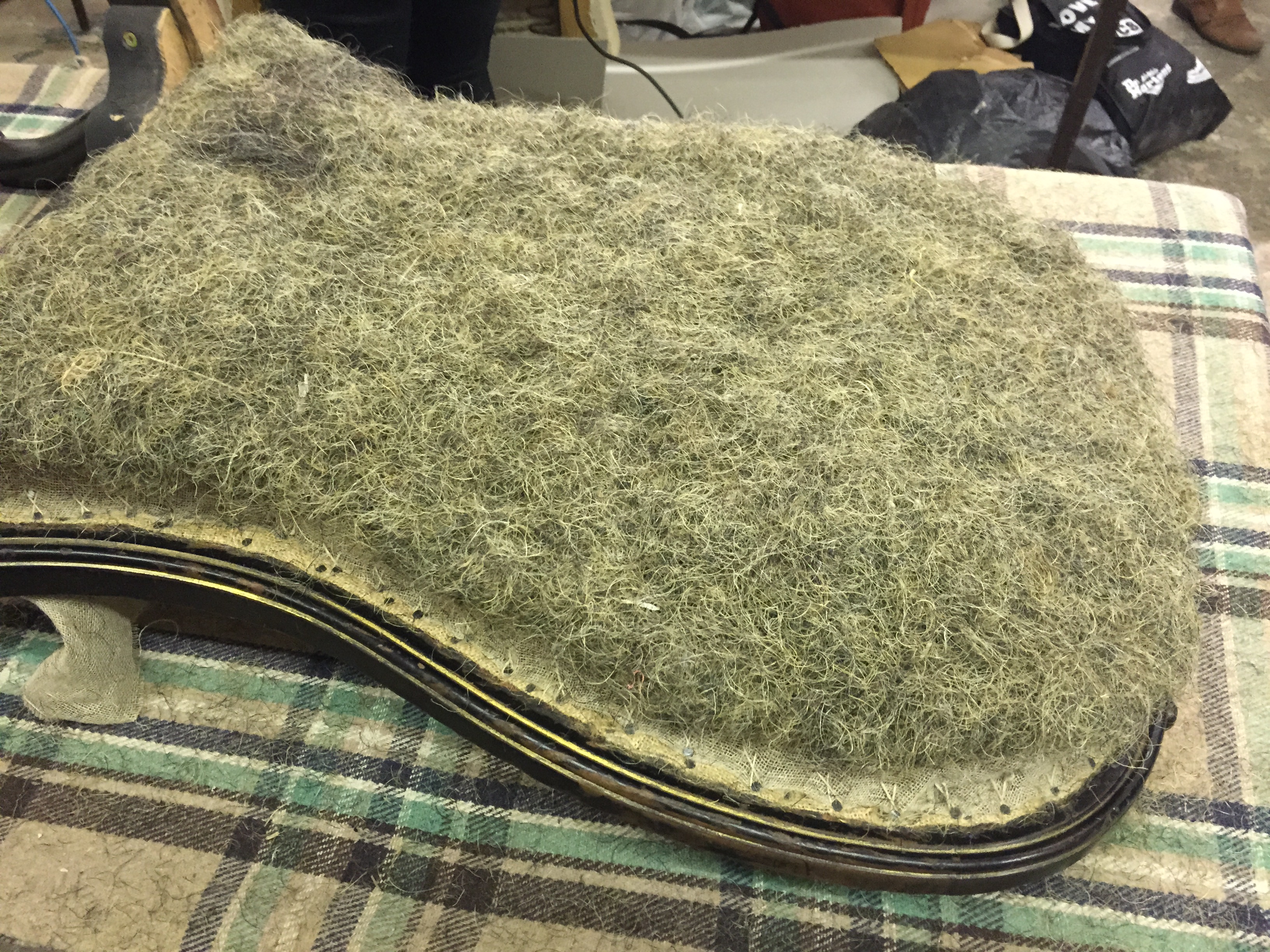
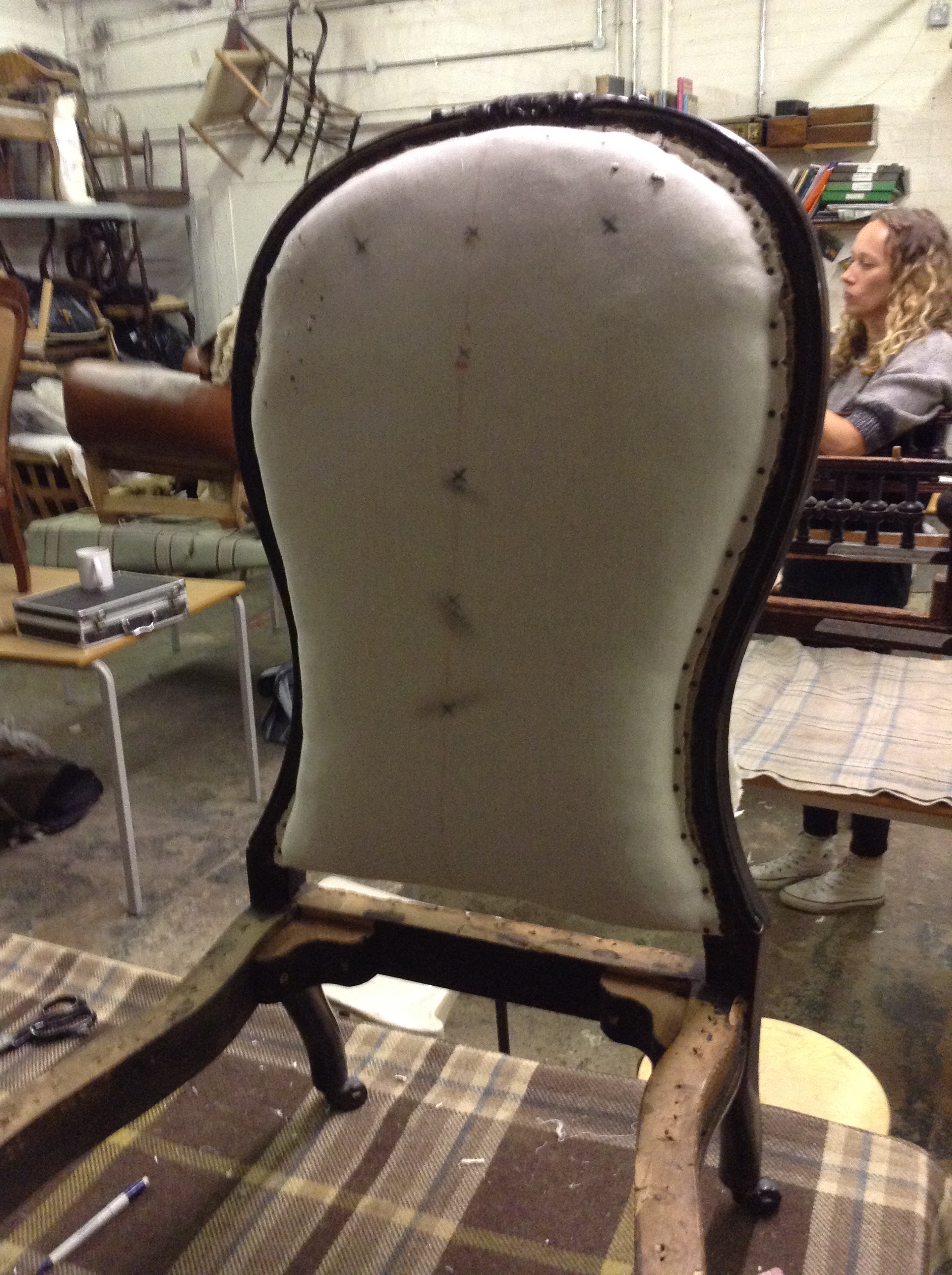
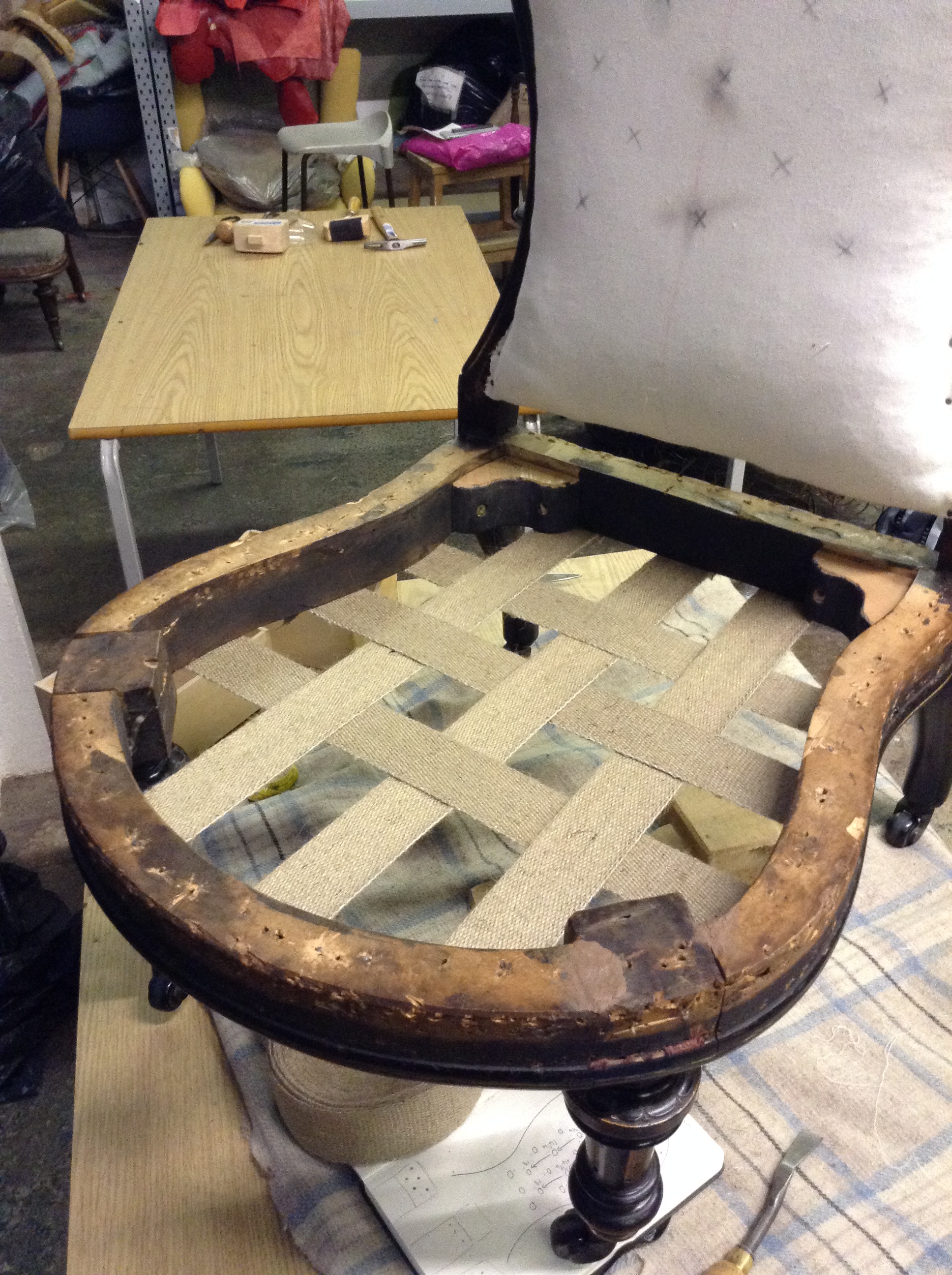
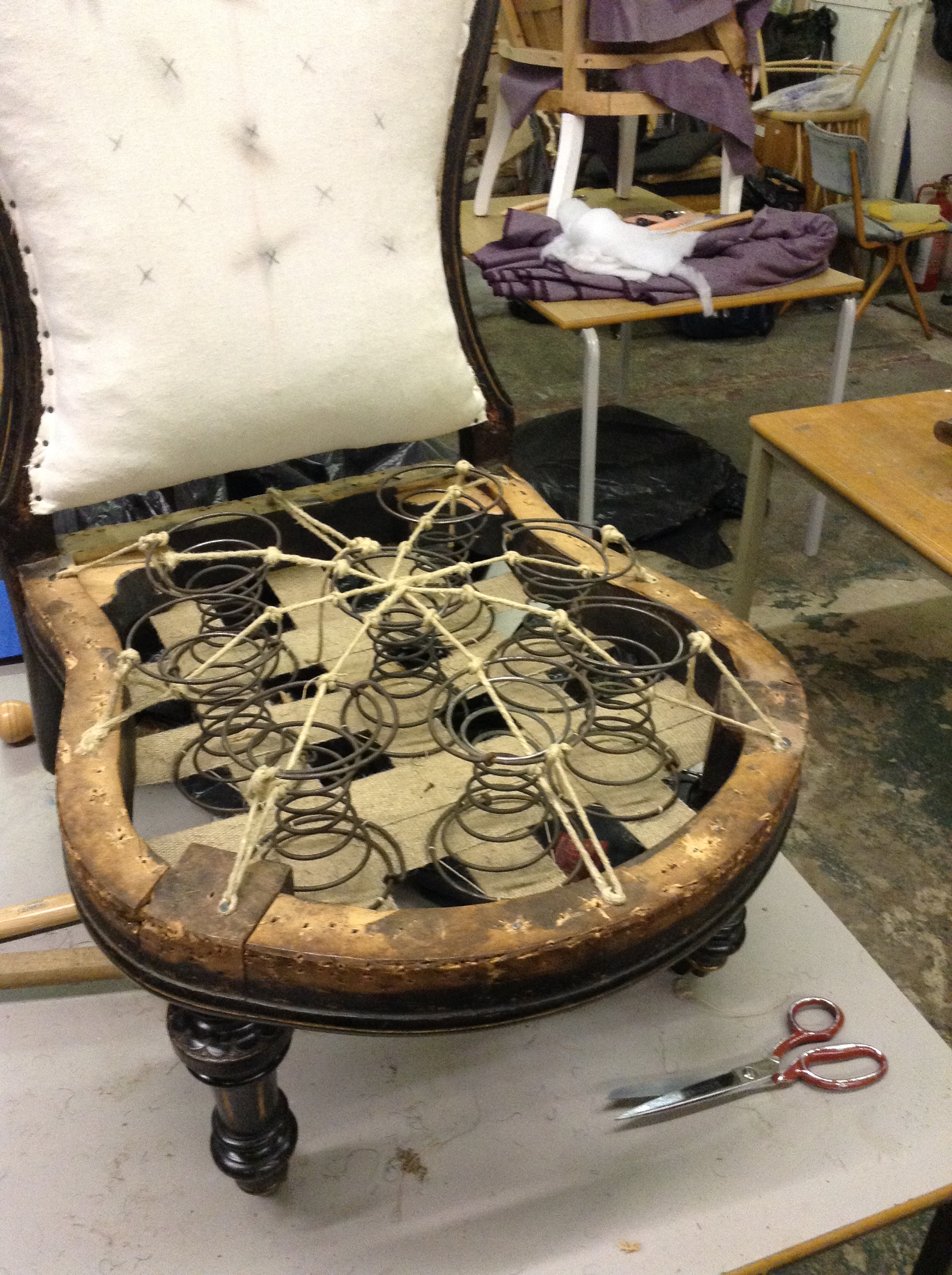
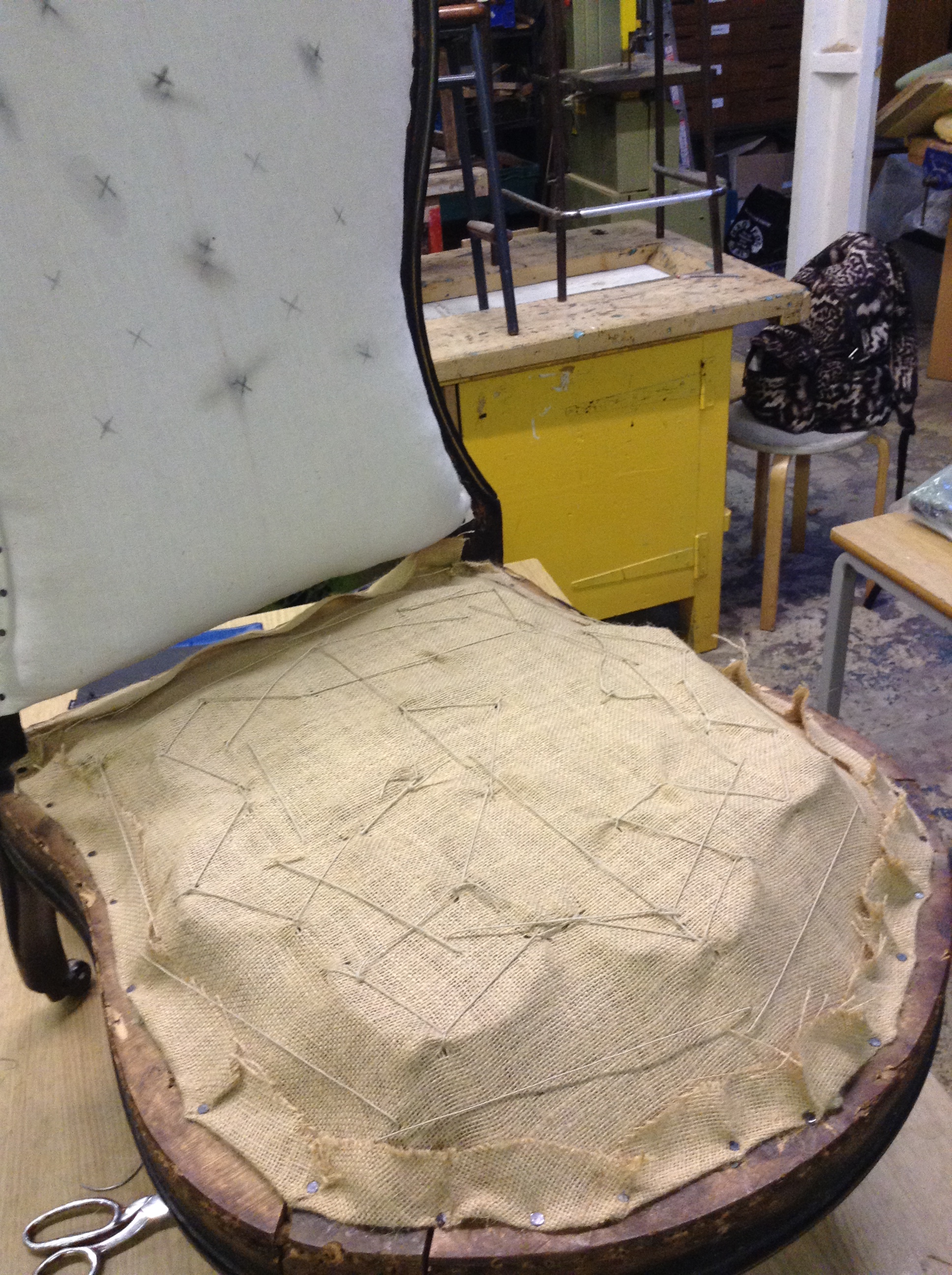
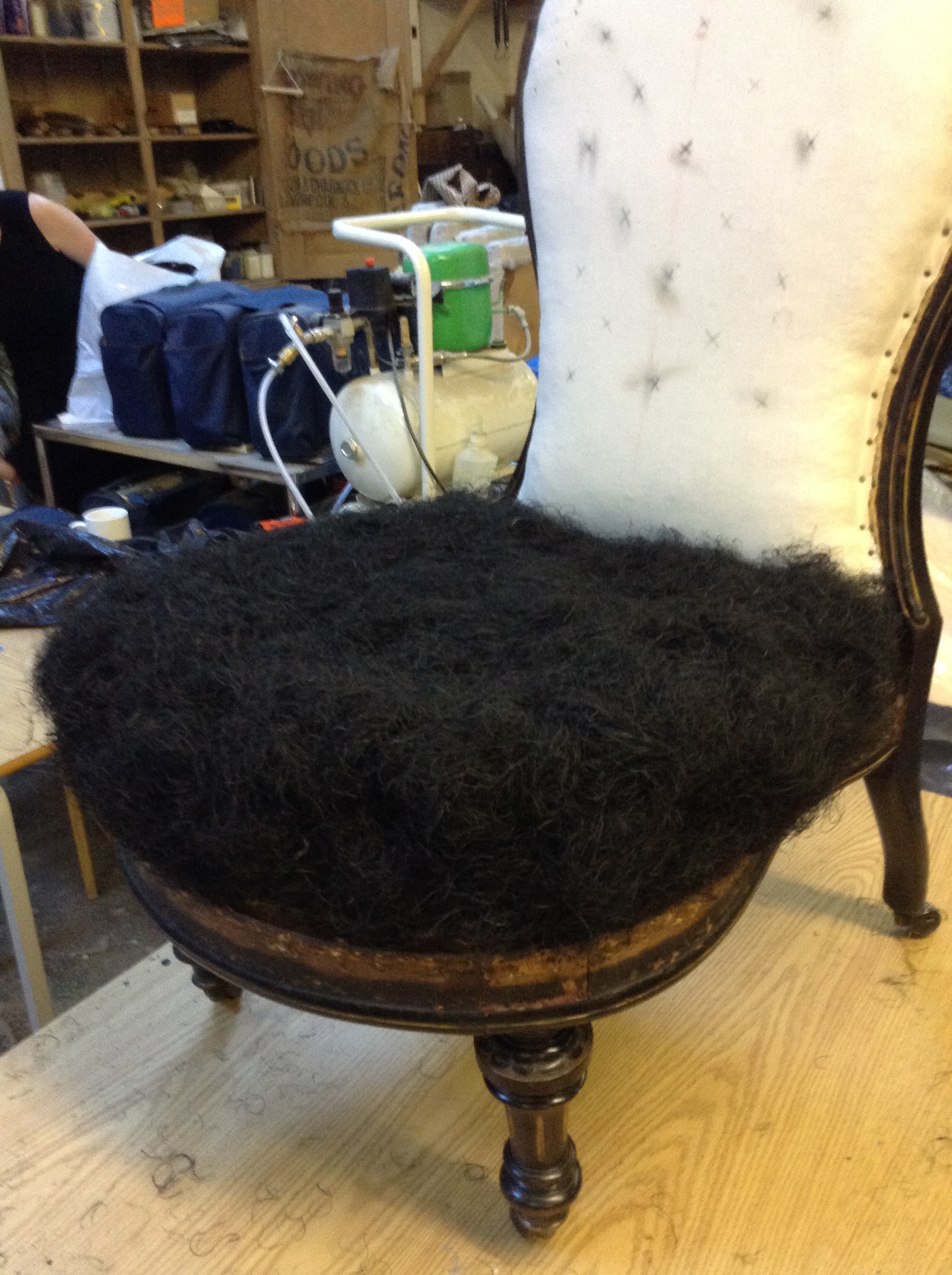
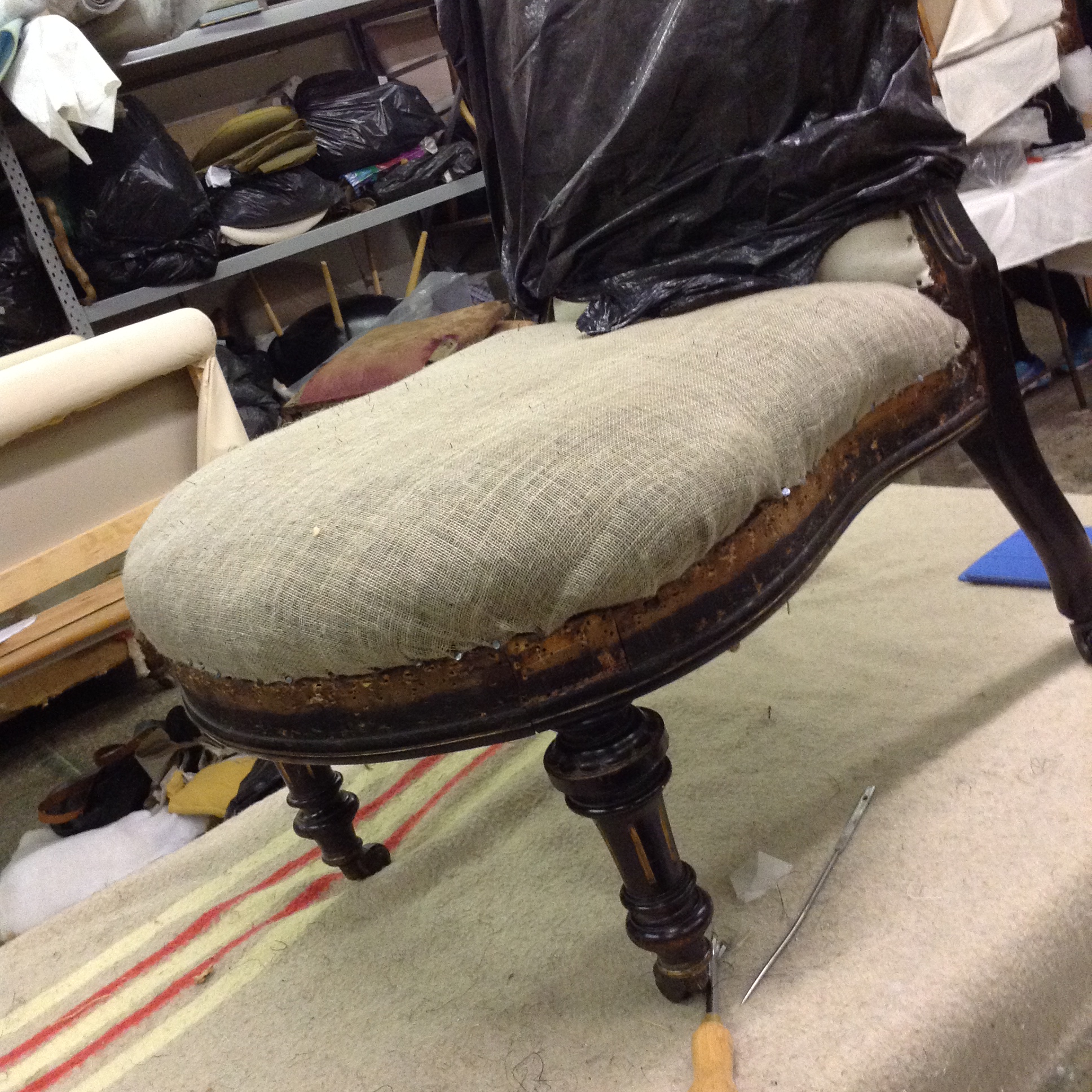
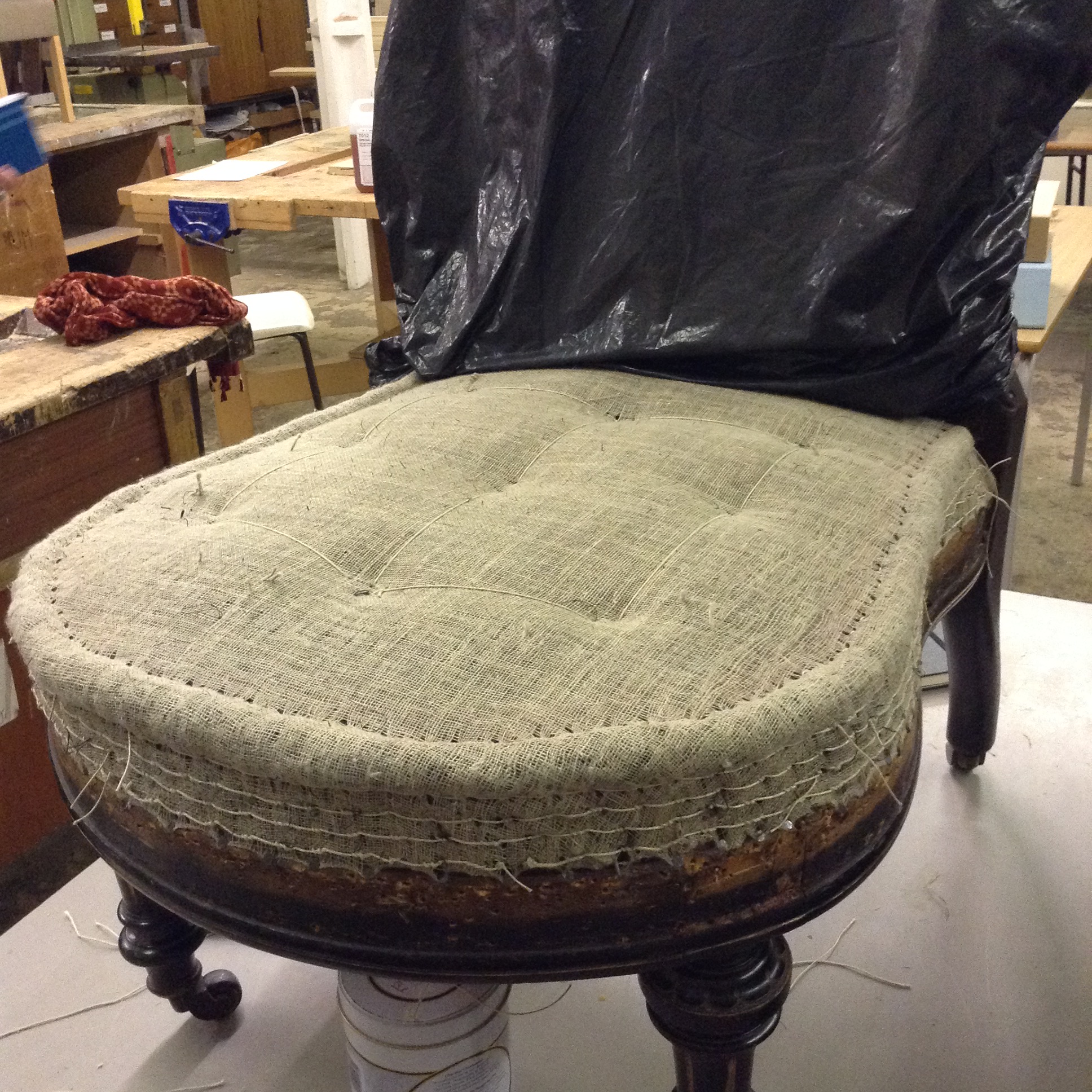
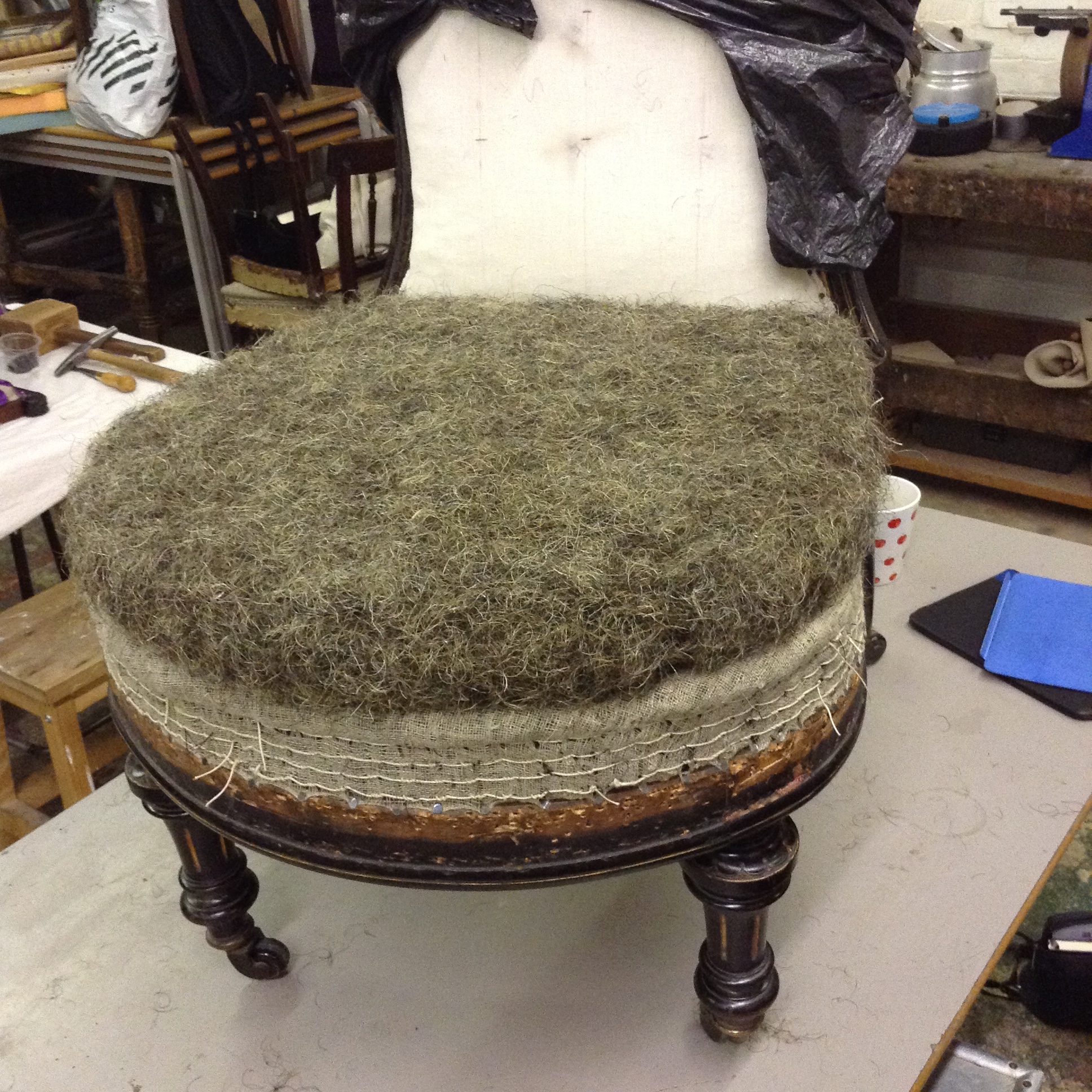
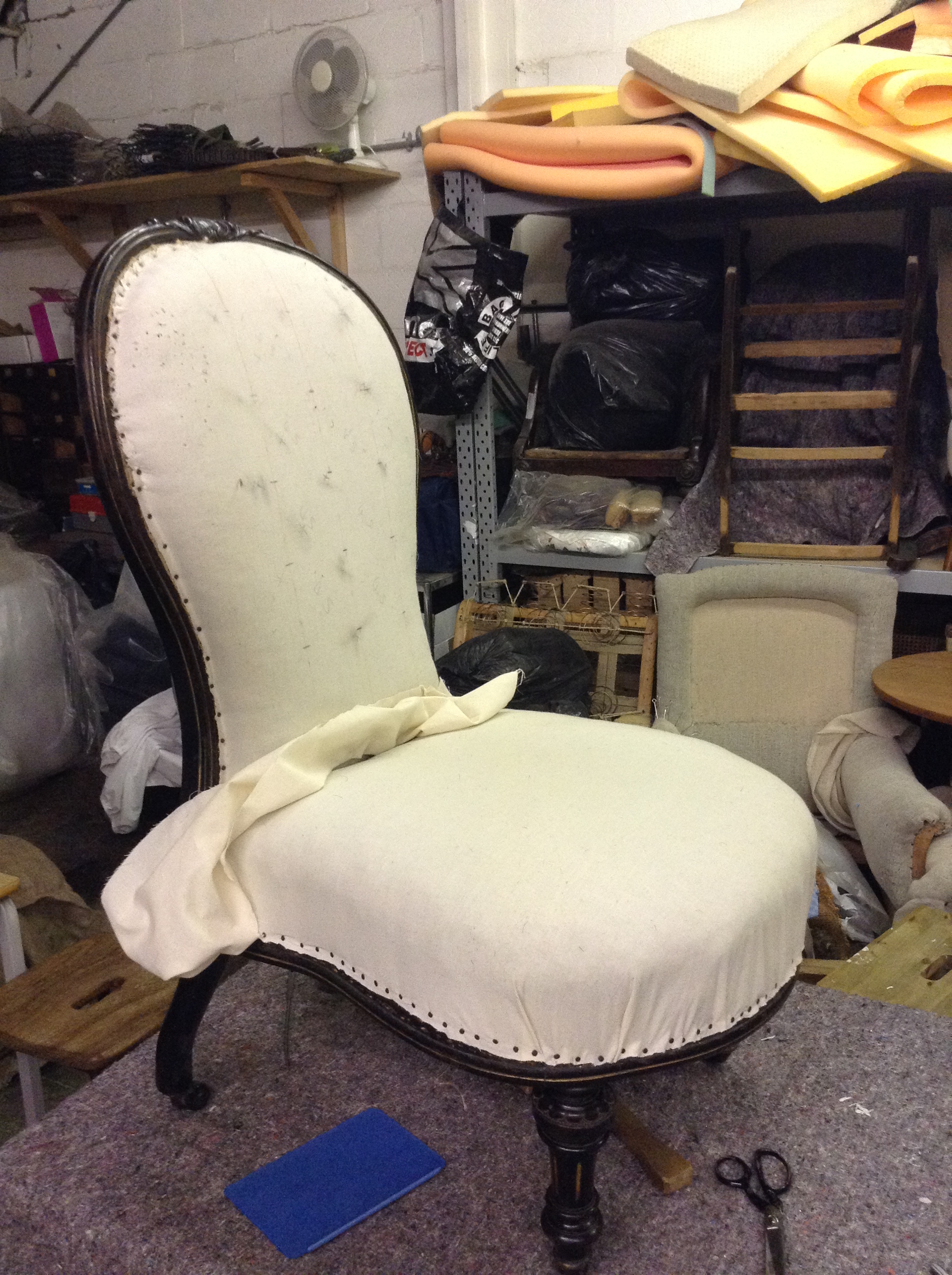
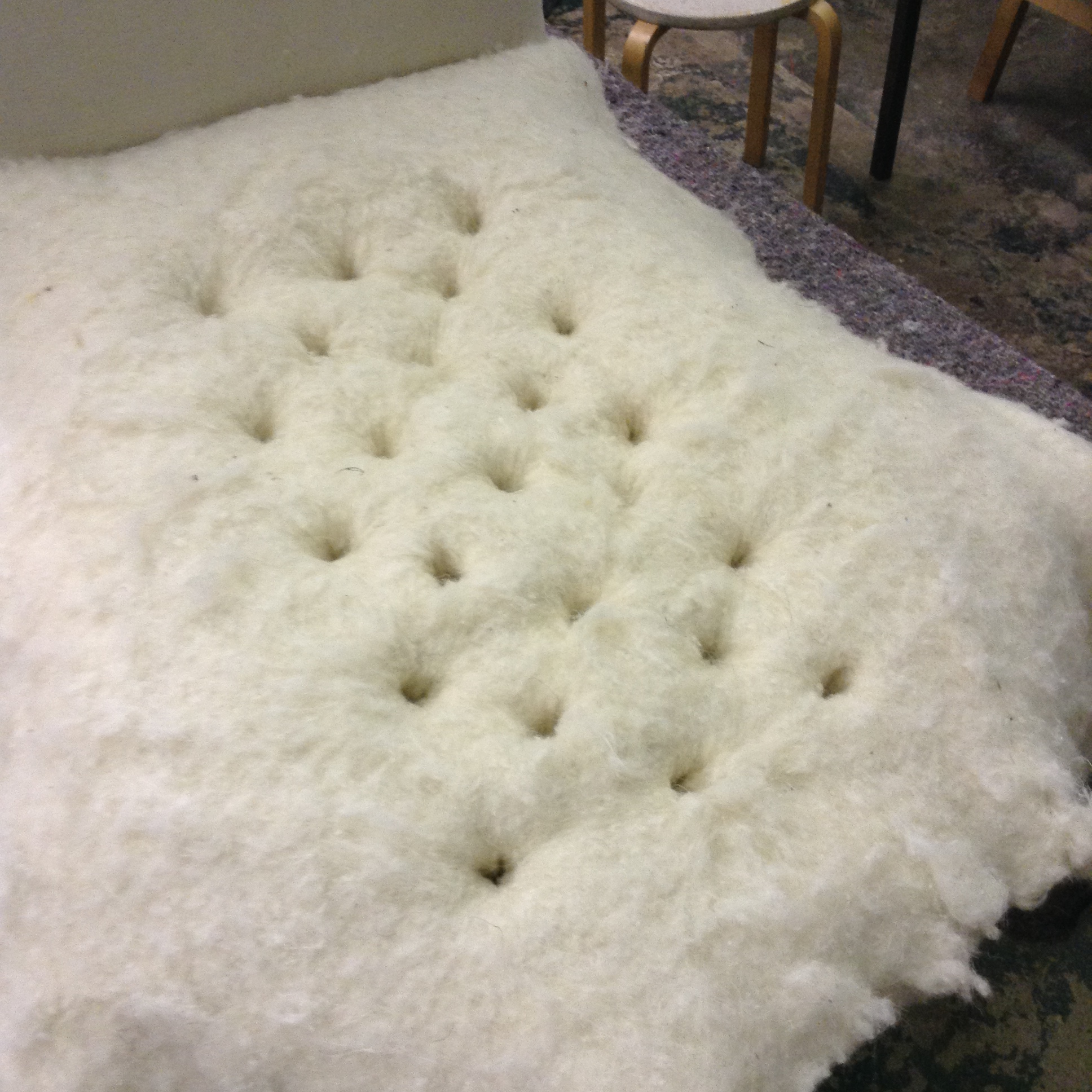
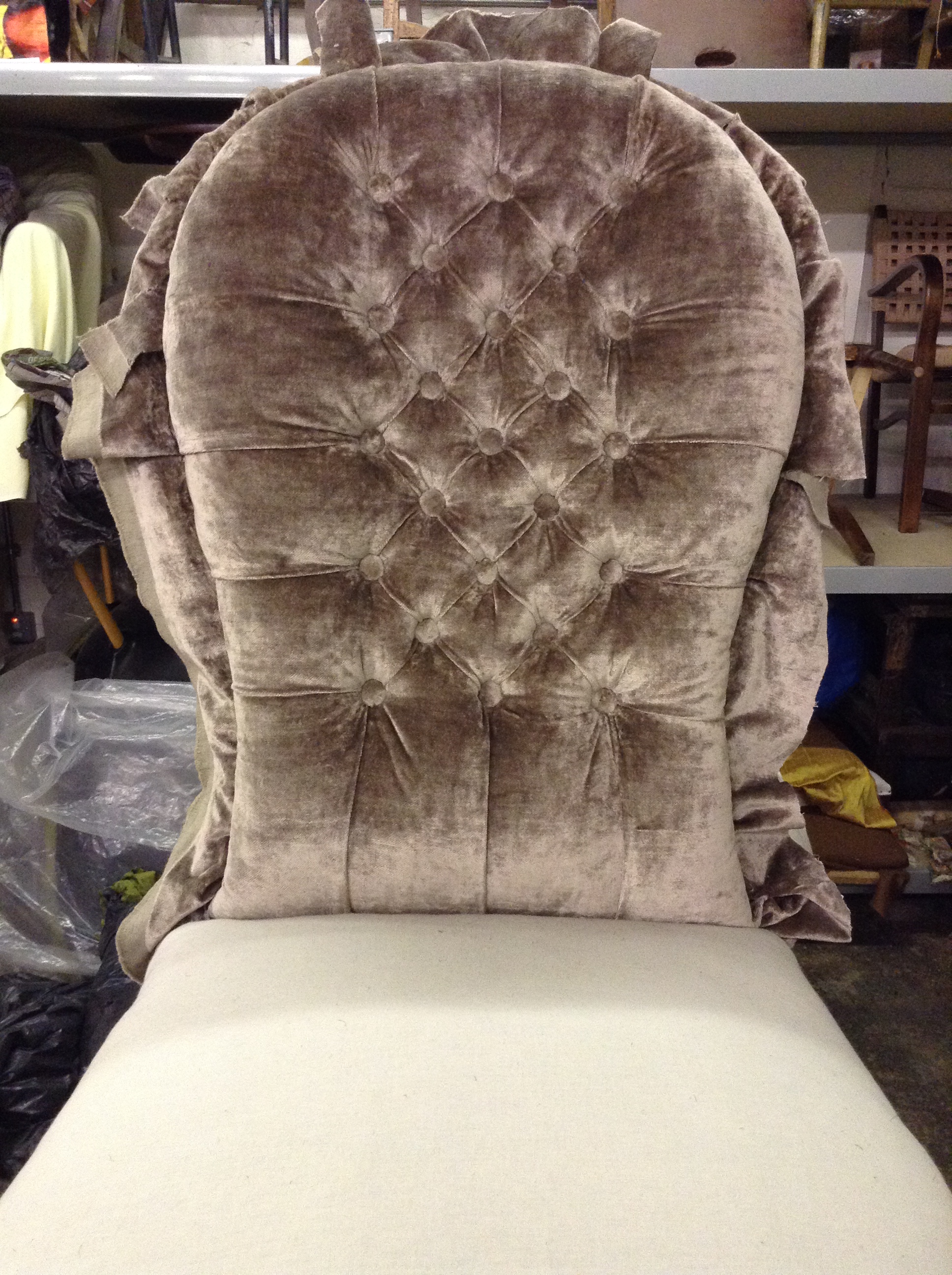
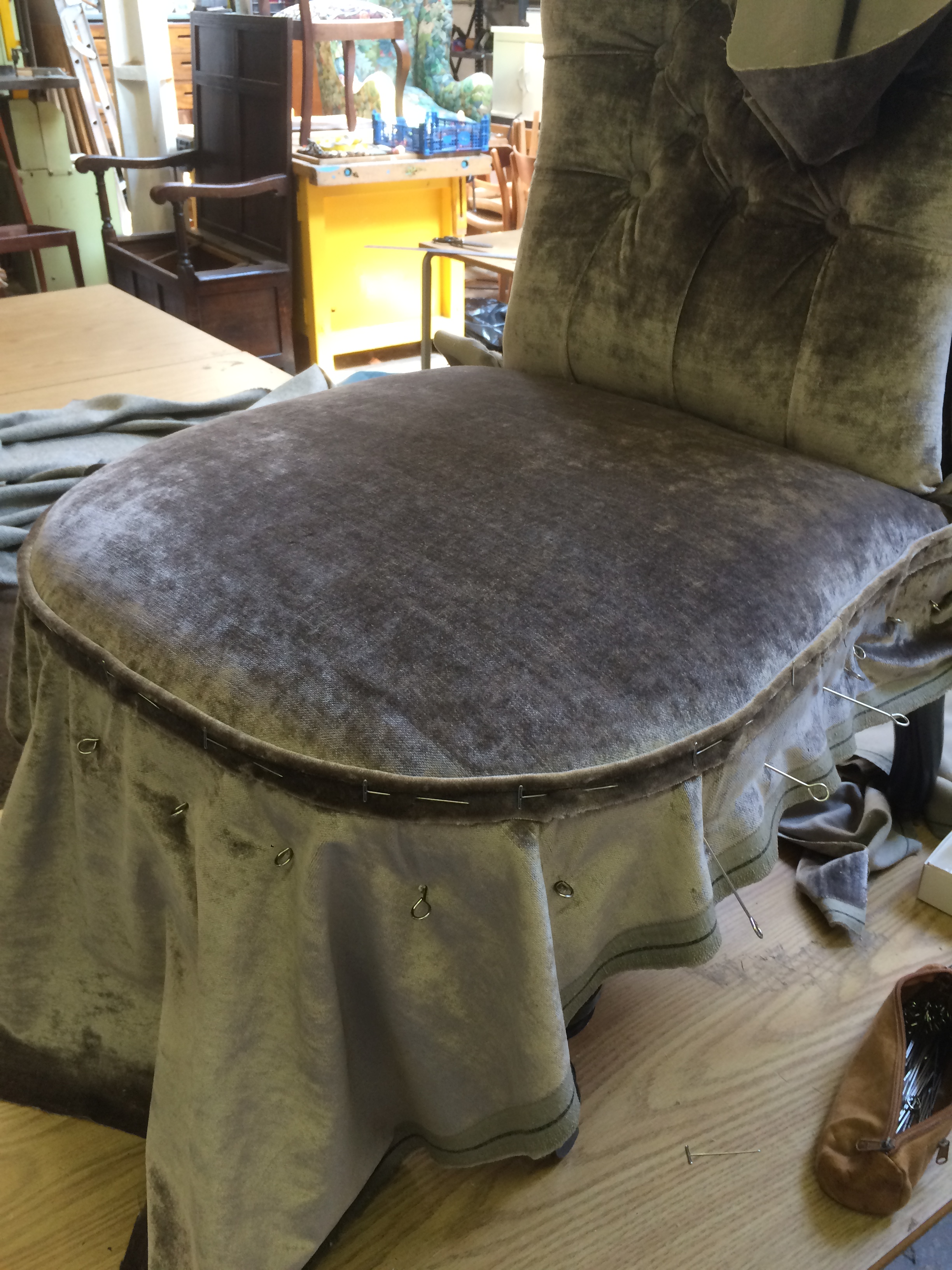
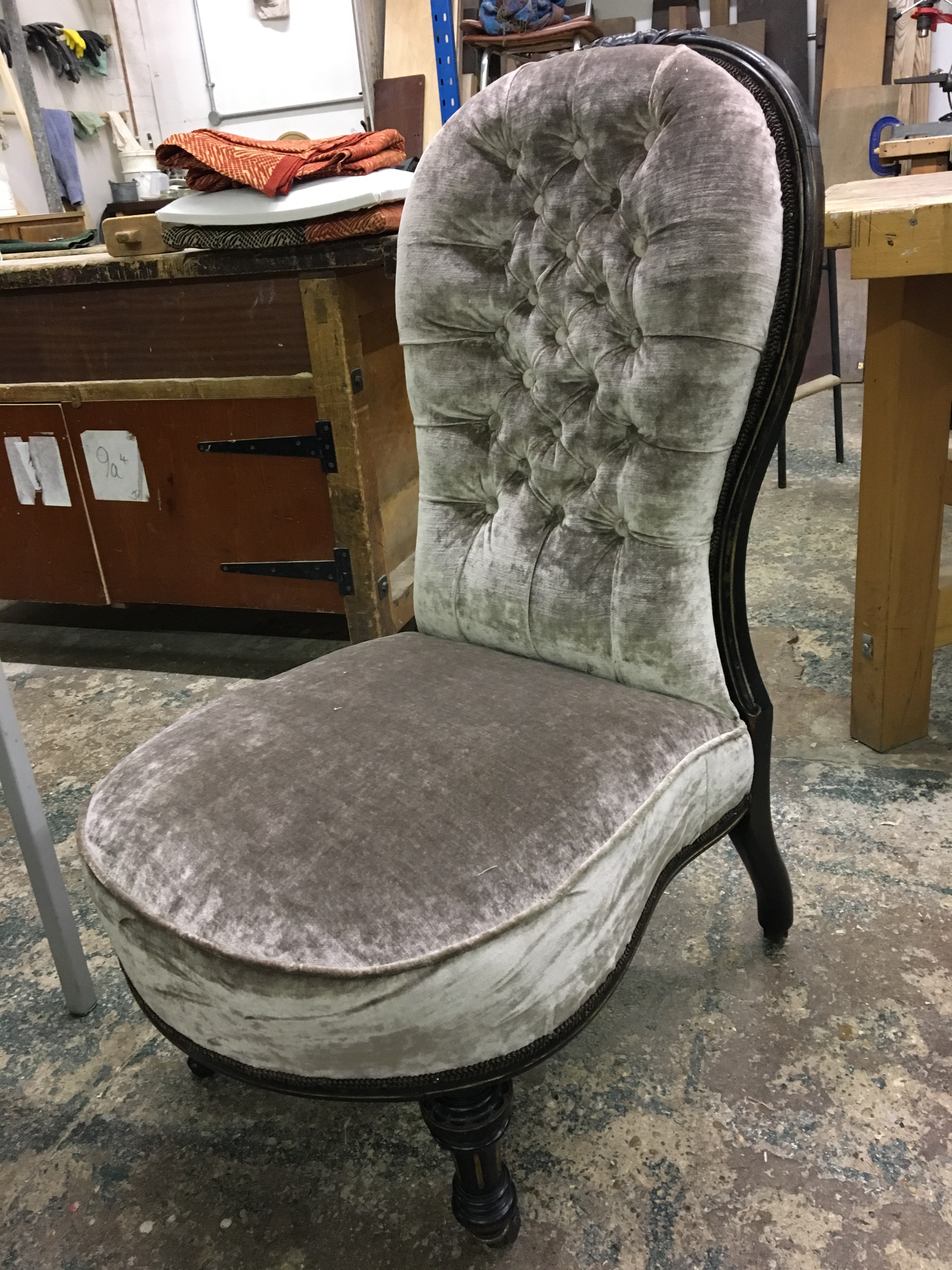
For the cover, I wanted something quite sumptuous that would complement the rather curvaceous shape of the chair. If I had been doing the chair for myself, I would have gone for something totally wild by The House of Hackney, but this was a project for my neighbour who wanted something much more restrained. We settled on a mushroom-coloured velvet. Enjoyable and challenging as the springs, stuffing and button-backing were to put in place, the most difficult part of the project by far was the velvet cover for the seat, which was constructed using a sewing machine rather than being hand sewn. Ironically, Amanda thought that using a sewing machine would be easier. Believe me, it wasn’t.
Velvet is a total nightmare to work with to put it mildly. For starters it has to be stored and handled carefully to avoid creases, which can’t be ironed out. If you look at the edge of the seat in the final picture above, you’ll see a series of horizontal lines caused when someone at the upholstery school decided to move the tube in which the velvet was stored and left it standing on its end, causing the velvet inside to slide downwards on the roll and crease badly. Secondly, sewing velvet with a sewing machine is awkward because the pile of the velvet causes both layers of material to move around in relation to each other as you try to sew them together. And they did. So much so that I was reduced to tears of anger and frustration on several occasions, which could only be assuaged with a lot of tea and chocolate hobnobs. My neighbour was absolutely lovely when I delivered the chair to her, saying that she particularly liked the “crushed” velvet cover. I still cringe inside whenever I think back to her saying that or look at that picture of the finished chair. If I never sew anything made of velvet ever again, it will be too soon.
A particular highlight of this project was having a legitimate excuse to visit a specialist purveyor of trimmings and notions in Marylebone called V V Rouleaux and asking to see their selection of gimp braid. As you might expect, the shop is camp to put it mildly, and run by the most charming women who don’t bat an eyelid when faced with overgrown schoolboys who snigger when saying the word “gimp”. In case you are wondering, gimp braid is decorative fabric edging tape used to hide the raw edge of the cover next to the frame on an upholstered item and the row of tacks holding it in place. Incidentally, the woman who served me in the shop suggested a rather interesting edging solution involving thin strips of leather wound together to form a sort of leather rope and then tacked into place. Intrigued, and more than a little surprised by her suggestion, I lost my nerve and went for chocolate brown silk instead. Still waters evidently run deep at V V Rouleaux.
Book binding
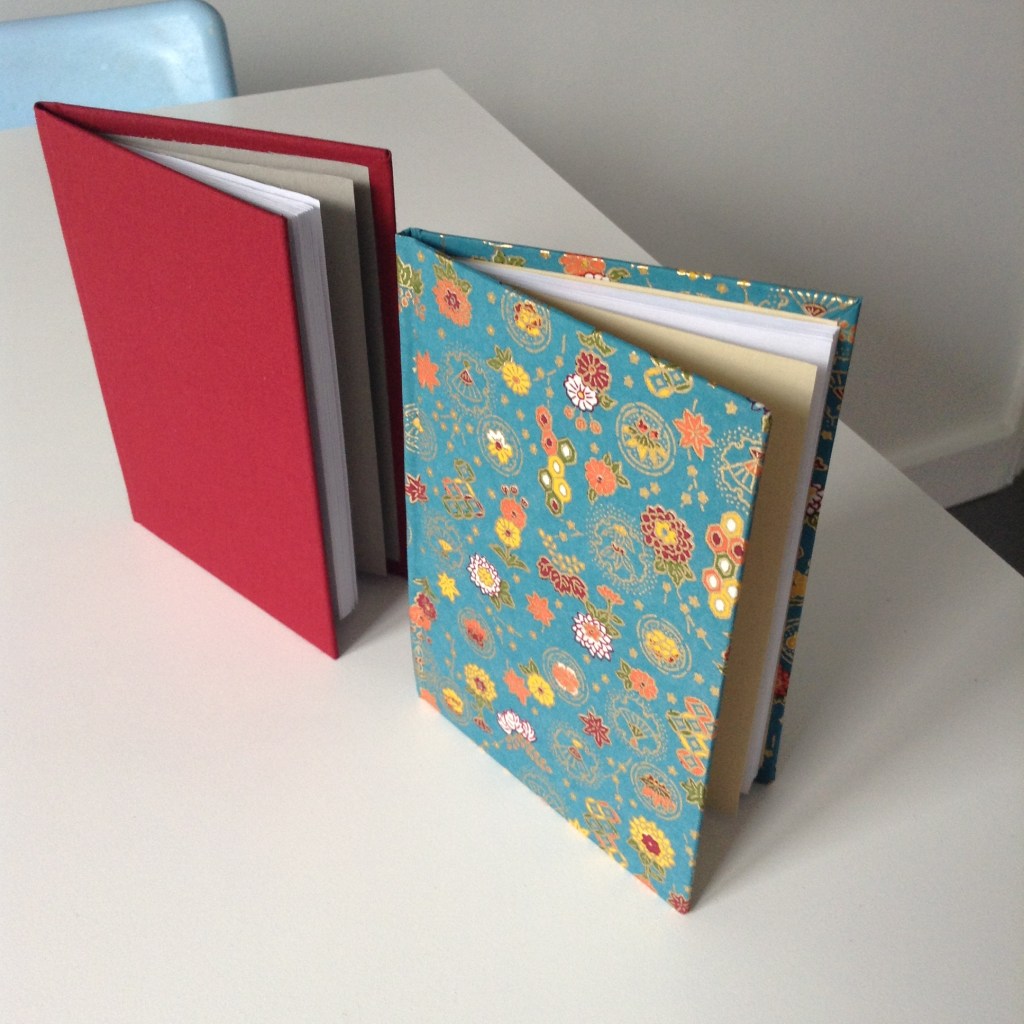
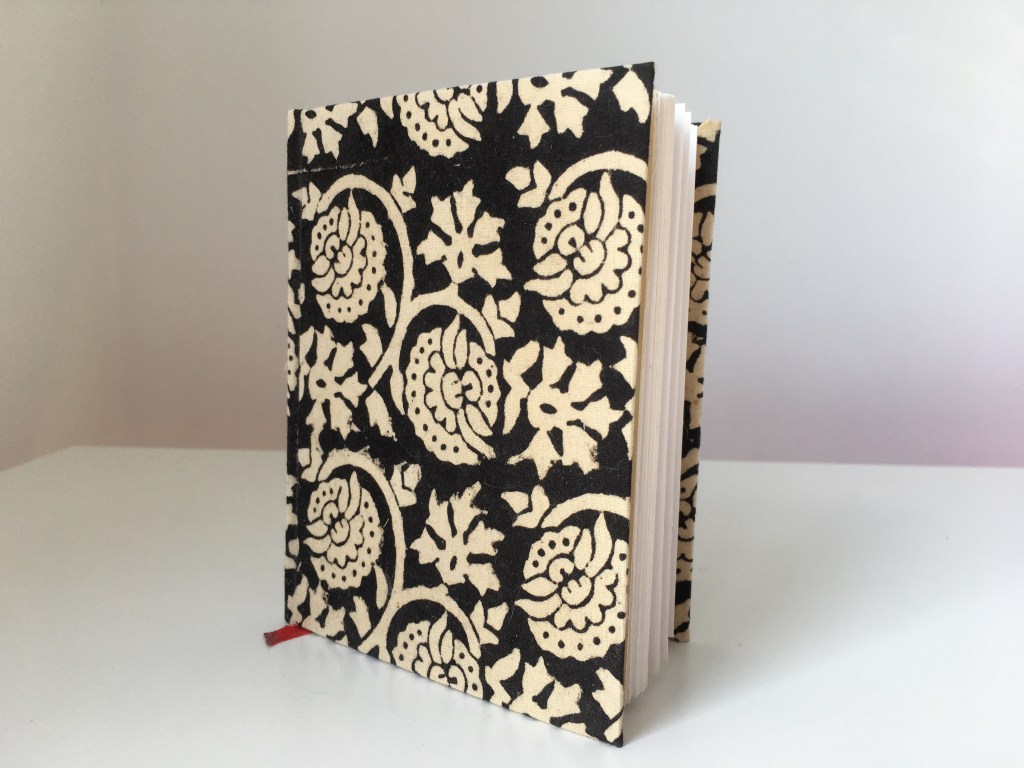
Having had a go at upholstery, I was keen to follow up with something else, and went on a two day book binding course at the St Bride Foundation just off Fleet Street, which was booked for me as a Christmas present by my other half Nick (aka the fella). Book binding is similar to upholstery in that it is practical, creative and involves sewing, so I knew it would be fun. I wasn’t disappointed. Incidentally, one of my uncles did book binding as a hobby when I was a young boy. Whereas he focused on re-binding and re-covering existing books, the course I went on involved learning how to create small notebooks from scratch. If, like me, you are a bit of a stationery fetishist, book binding is fantastic as it gives you an excuse to browse different types and designs of paper and cloth in specialist shops, and produce notebooks to your own specifications. Over the course of two days, I produced a variety of notebooks, some of which are shown below. Needless to say, these are being kept for best and haven’t been written in.
Cardboard boxes and Miffy
Most recently, I’ve started creating models of things using household objects as a distraction from the tedium of lockdown resulting from Covid-19, which has caused me to cancel at least two holidays and postpone a three day pottery course in Dorset that I was due to go on in 2020. I’ve set out below a few pictures of the festive scenes that Nick and I came up with for Christmas and Easter in lockdown, as well as 4 May 2021, along with some stills of the protagonists. I think these show better than anything else what you can achieve if you let yourself go, release your inner child and allow your imagination to run riot. As well as being enormous fun to do, it’s a very good way of opening your mind to different possibilities and perspectives. In my humble opinion, given the emphasis these days on innovation in legal services, this is as important professionally as it is recreationally (perhaps more so), and something which many of my former colleagues who claim to excel at providing “creative solutions for clients” would be well advised to try.
A recurring character in these scenes is, of course, Miffy (or Nijntje as she is known in her native Netherlands), the rabbit designed by dutch graphic designer Dick Bruna in around 1953, who features in quite a few books from my childhood and has become a source of creative inspiration. The scenes so far have been kitsch, tongue-in-cheek and more than a little camp. After all, if that’s where the artistic muse decides to lead me, who am I to refuse to follow?
Christmas 2020
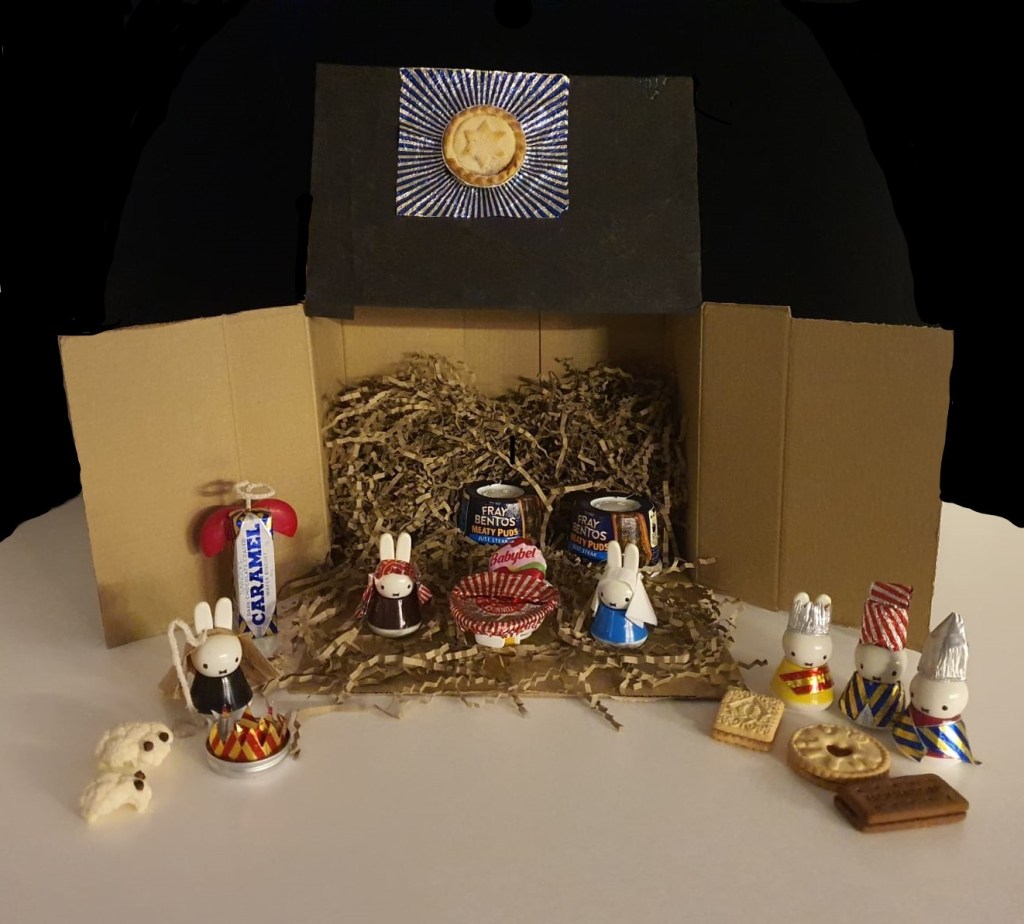
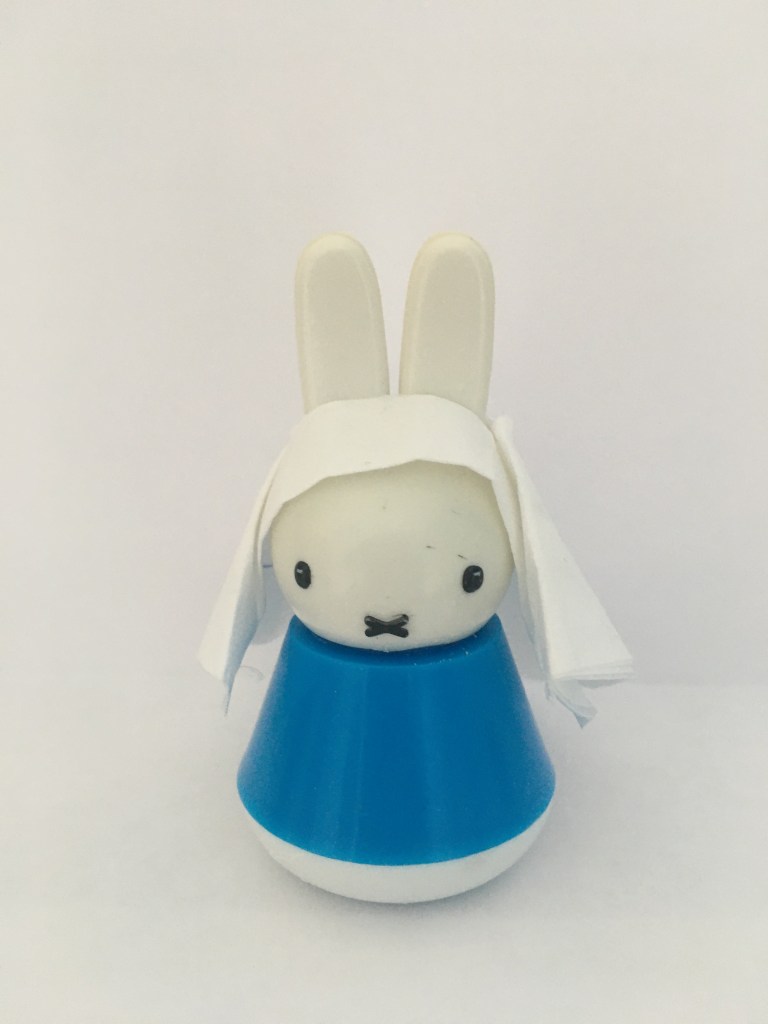
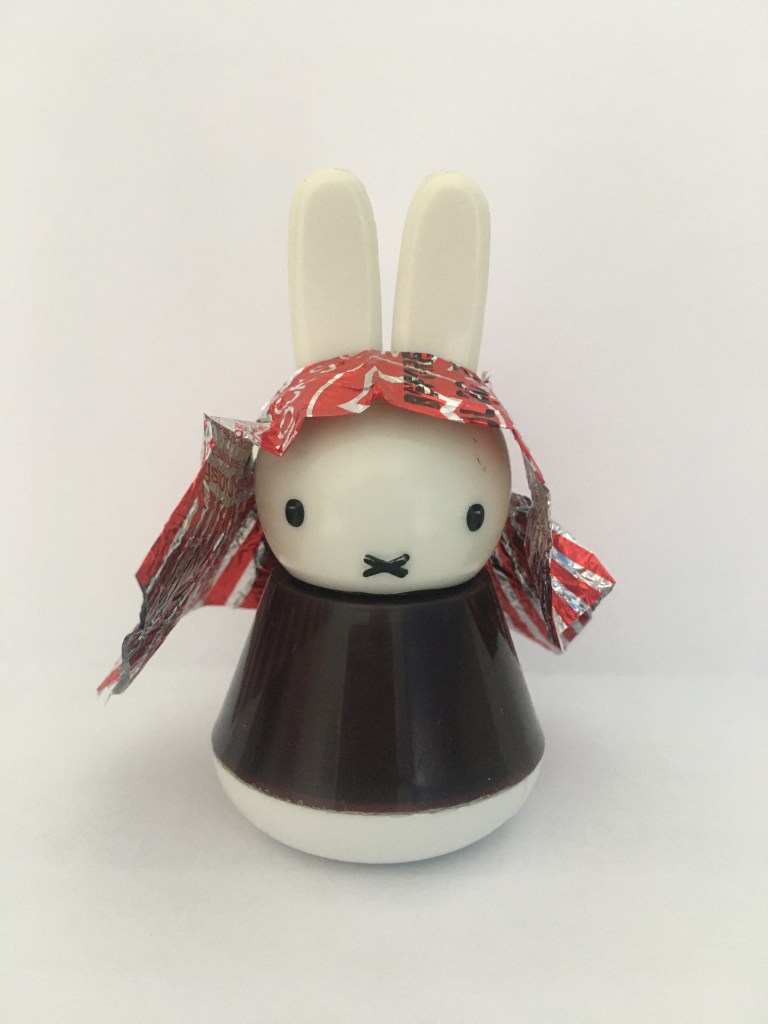
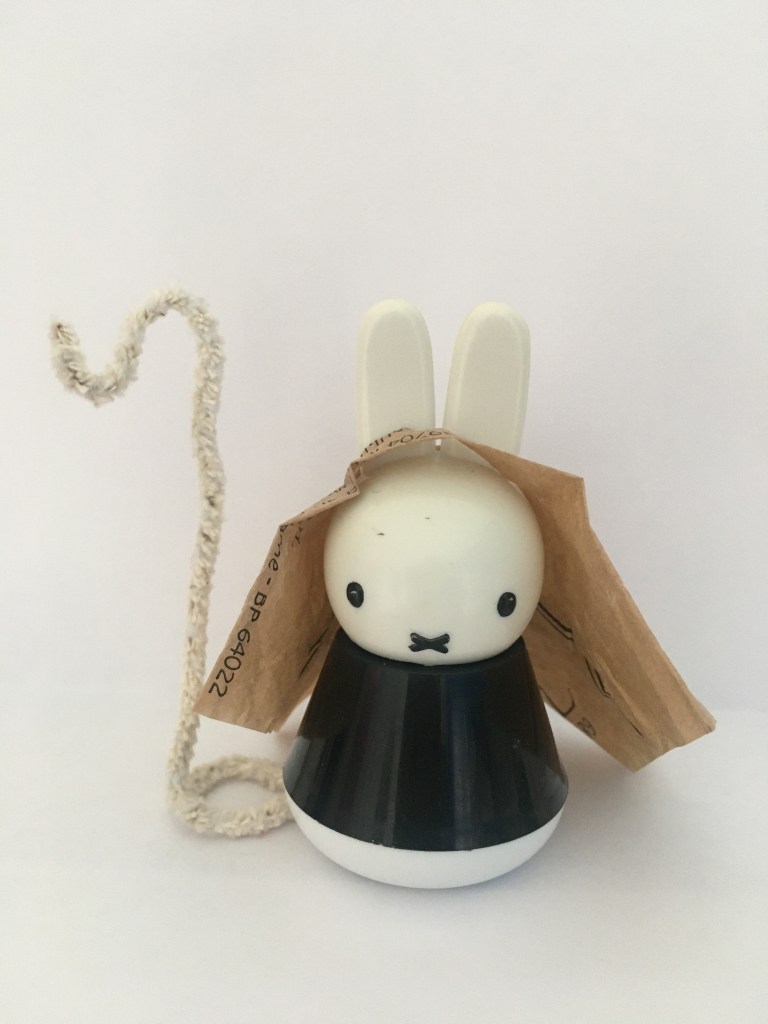
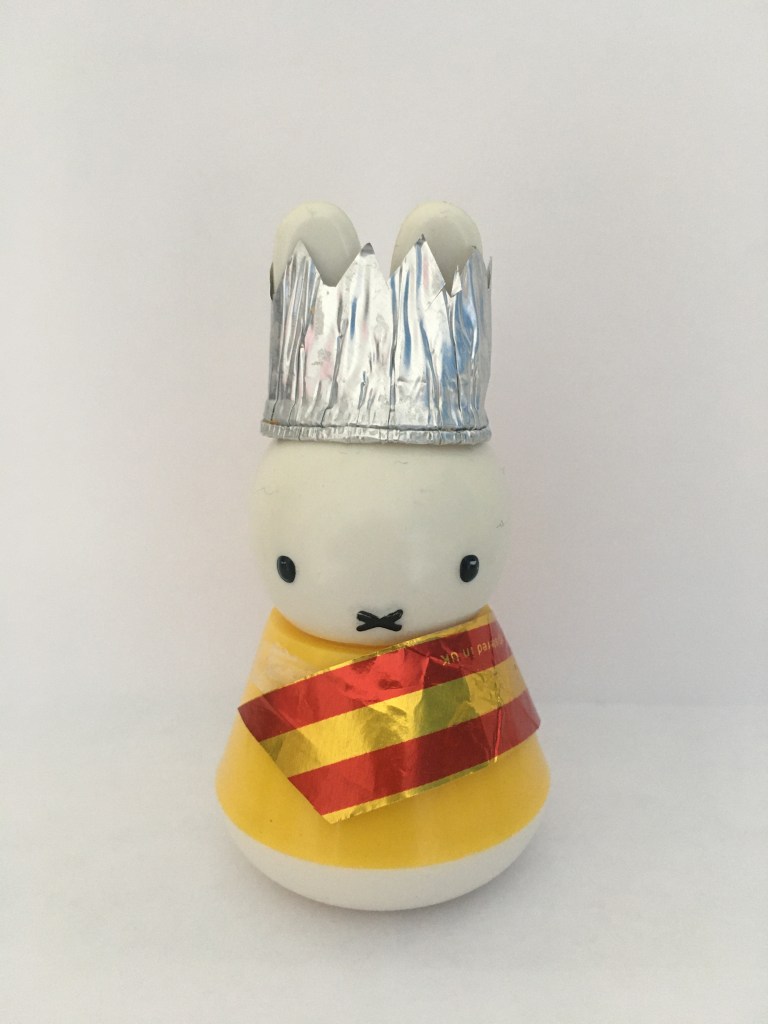
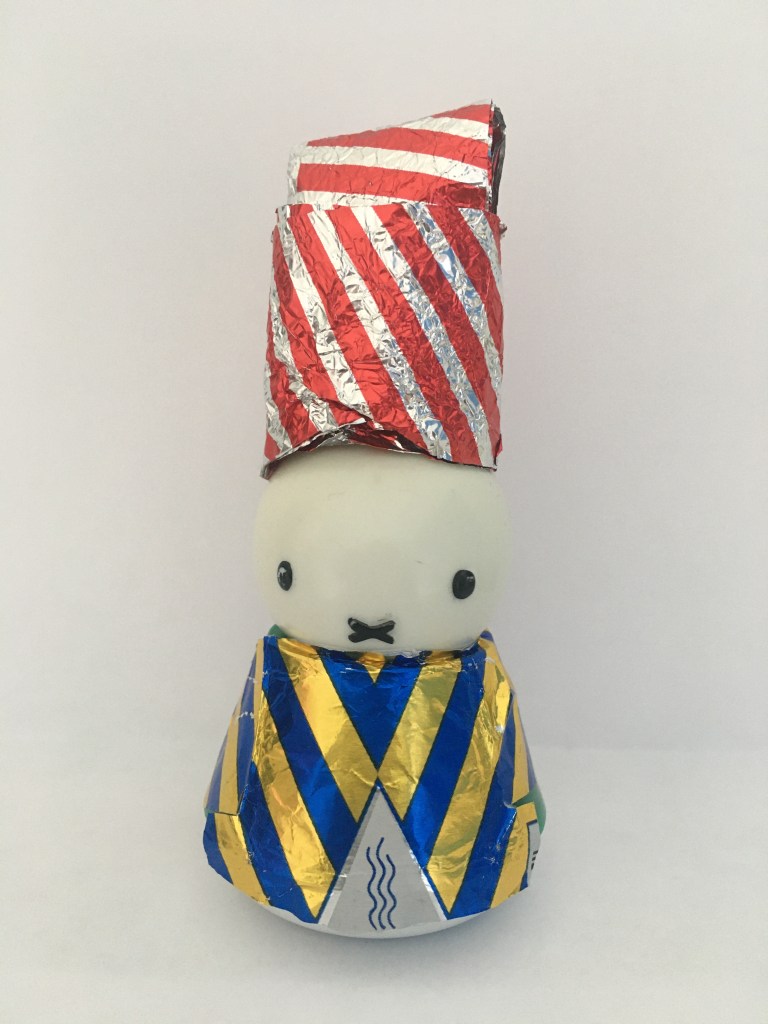
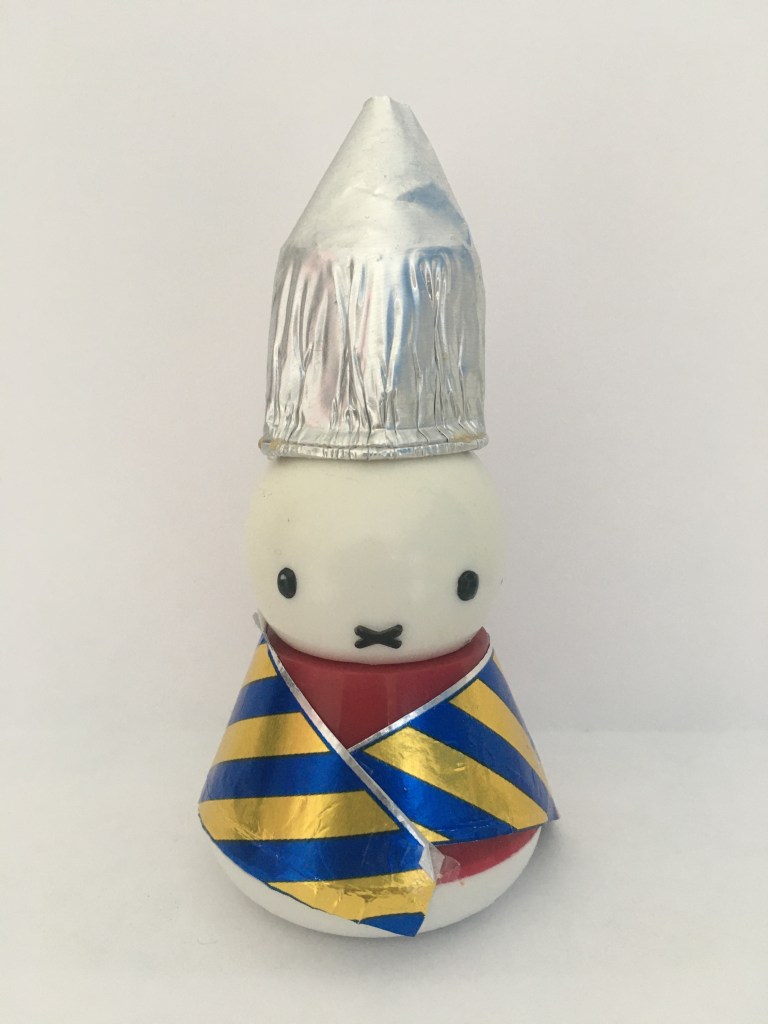
The sheep are cauliflower florets with peppercorn eyes (which experience has taught me work much better than cotton wool), the cattle are lowing in their Fray Bentos tins, and the nativity characters are felt-tipped pens shaped like Miffy. Given my predilection for cakes and biscuits, it seemed obvious that the gifts from the three kings should be some of my personal favourites and of course that the star of Bethlehem should be a mince pie. Joseph is modelling a paper bag from Paul, the French bakery. As for the wrappers used to provide a little sparkle for the outfits of the three kings, can you think of a better source of everyday glamour and luxury than a Tunnock’s teacake or caramel wafer? And last, but by no means least, in an homage to Kath and Kim, baby Jesus is a Babybel cheese. Geddit?
Easter 2021
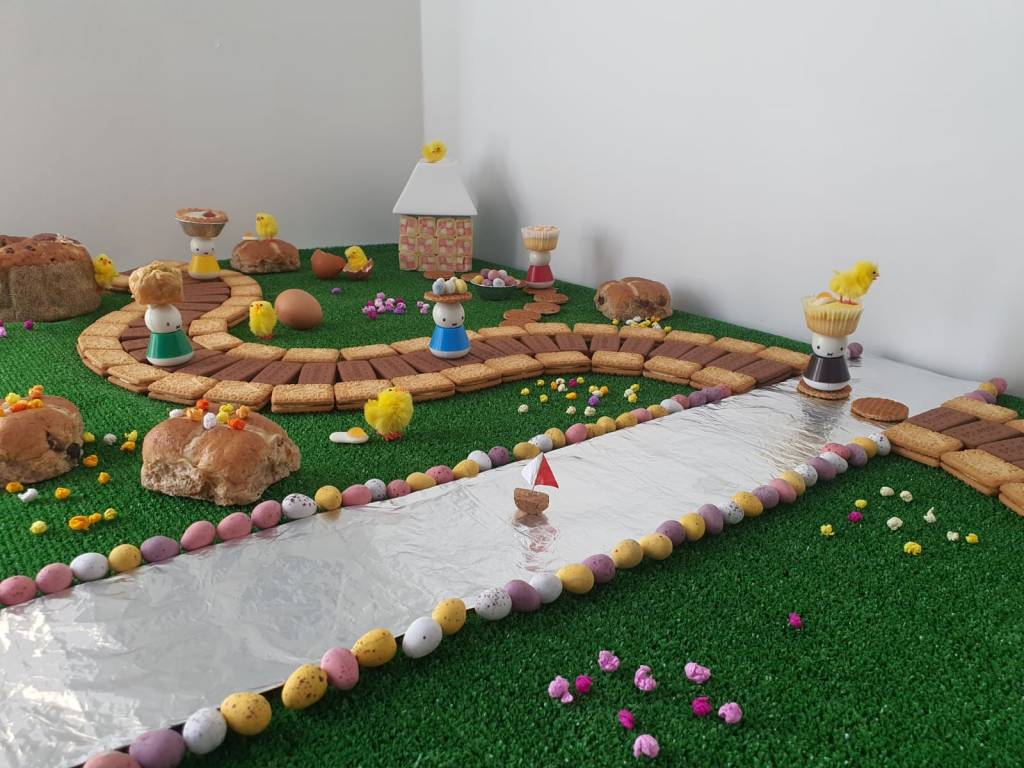
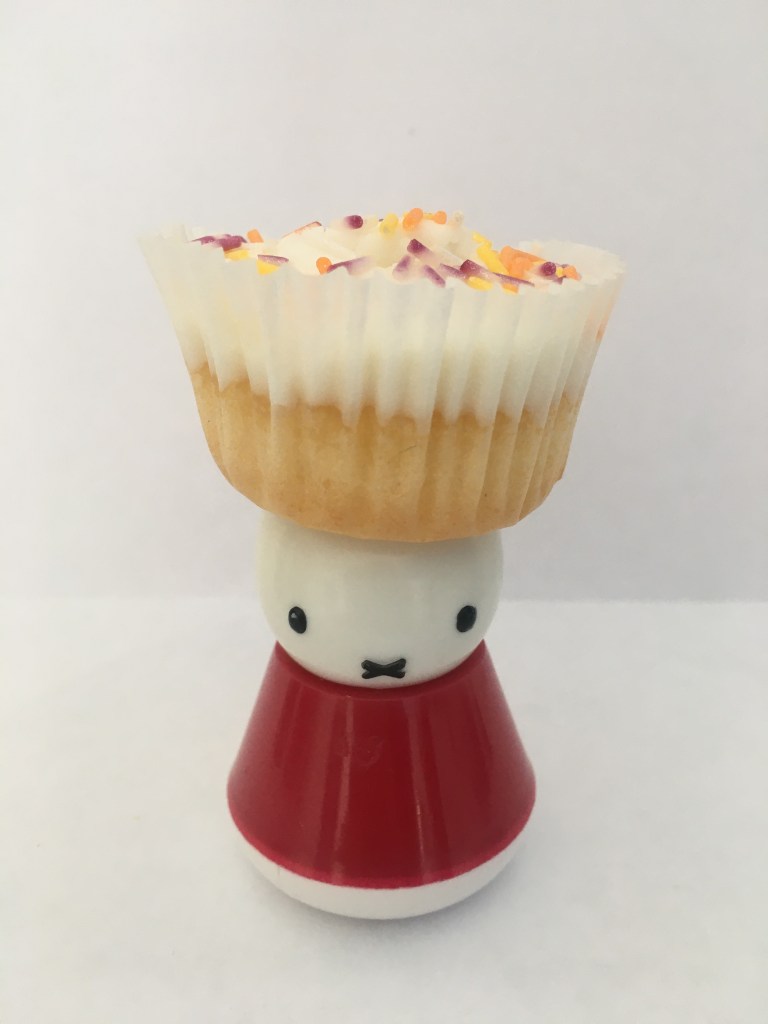
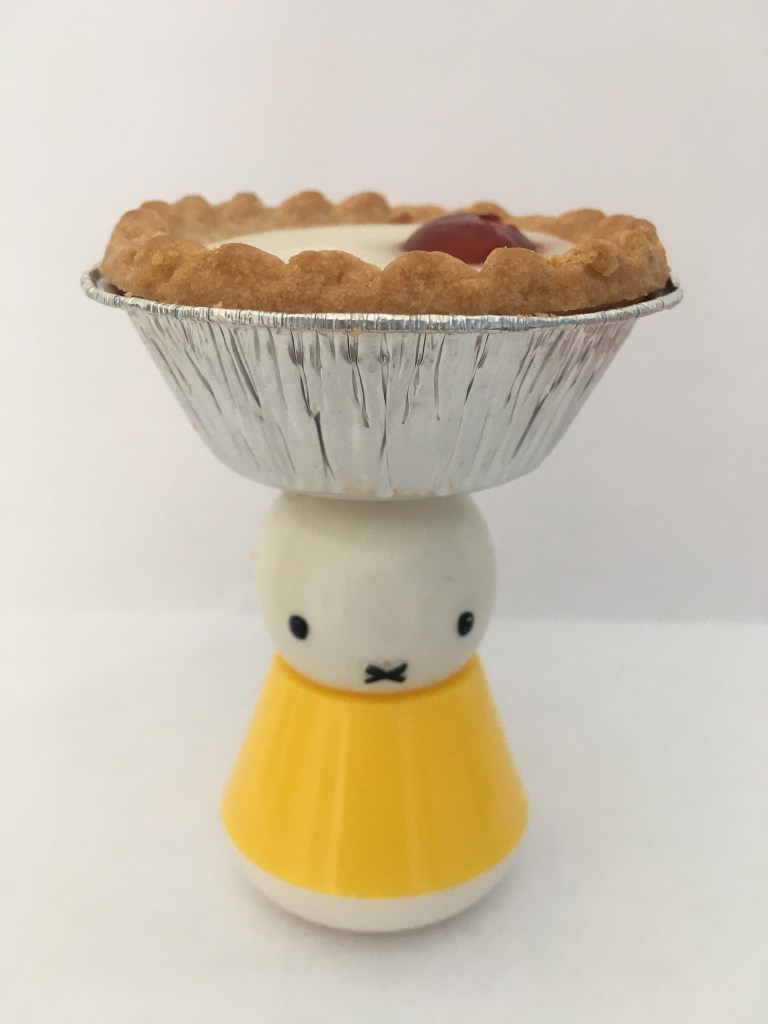
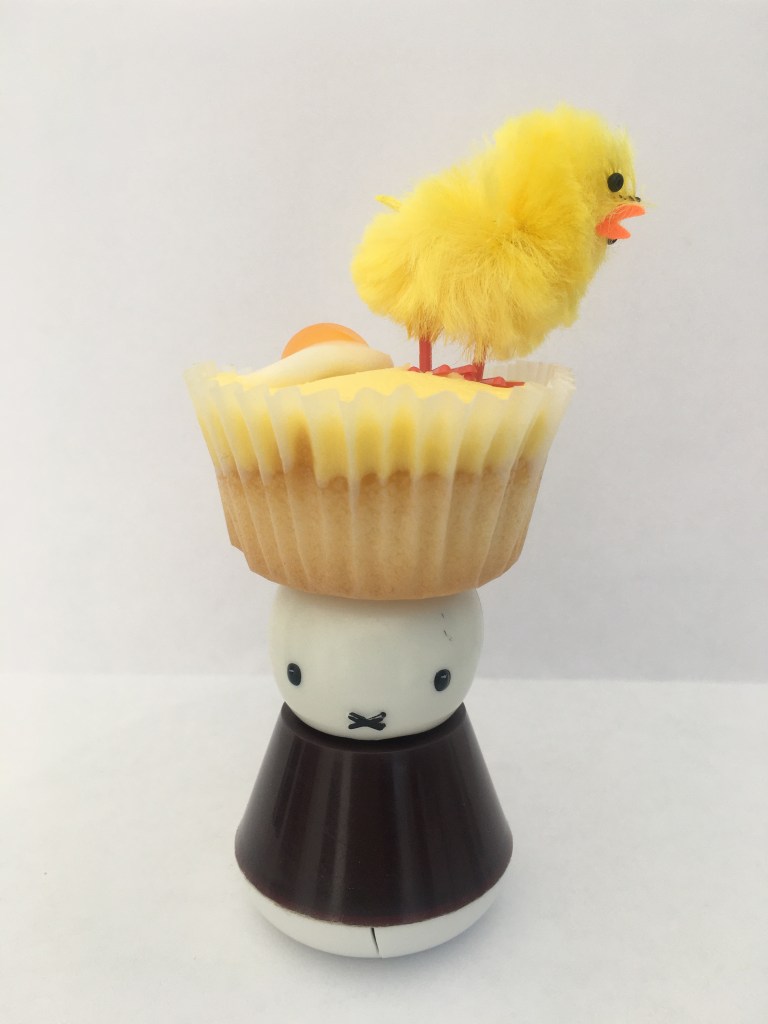
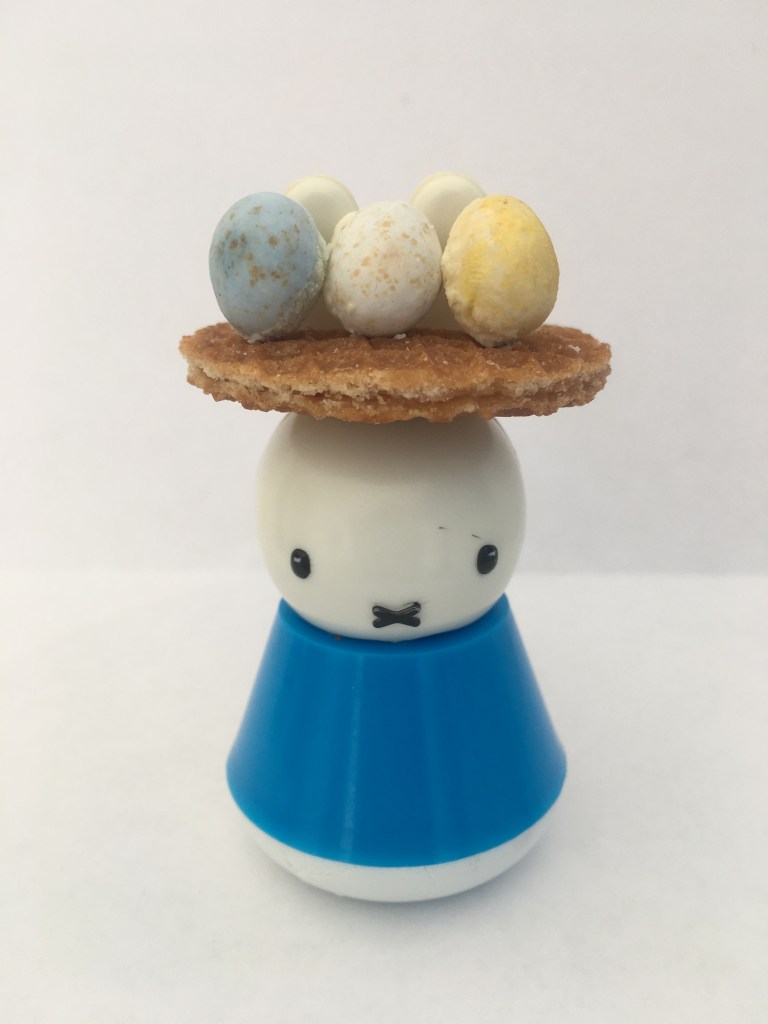
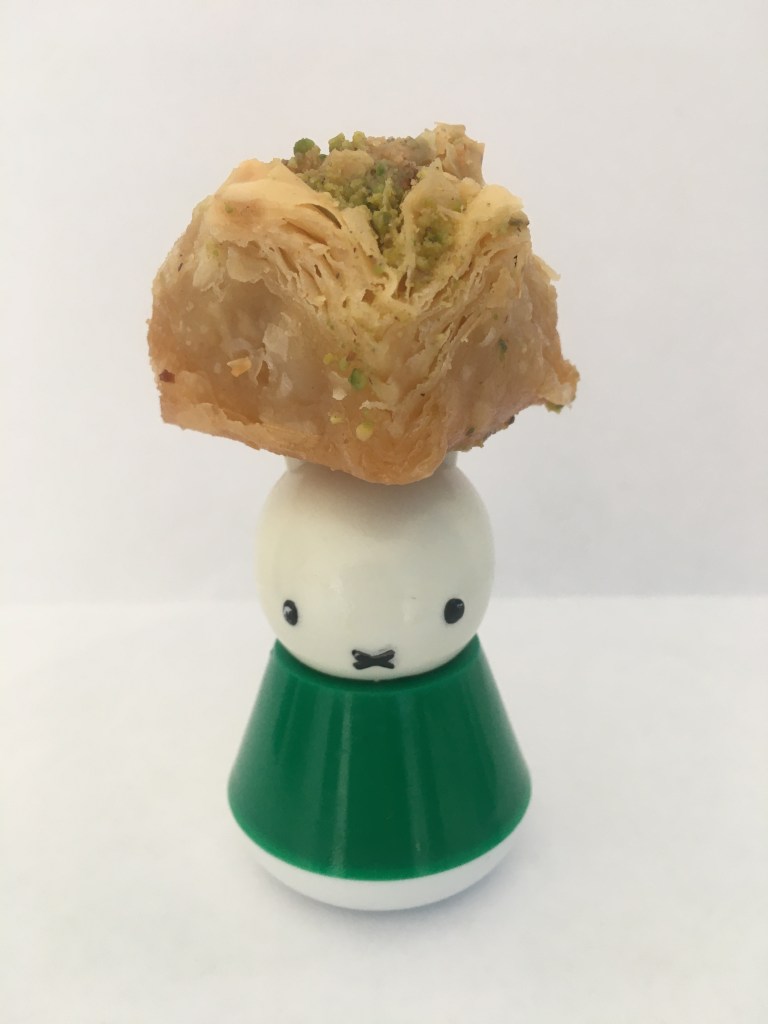
The scene is of a socially-distanced Easter parade taking place in an enchanted garden, where hot cross buns grow, the path is made of biscuits, and fluffy chicks wander about amongst eggs of various types without a care in the world, whilst pondering important existential and moral questions. The contestants in the Easter parade are, of course, my faithful Miffy-shaped felt-tipped pens. There’s more than a nod to Hieronymous Bosch, the Tellytubbies, the Wizard of Oz, Little Red Riding Hood and Hansel & Gretel, not to mention a reference to Miffy’s homeland in the form of the mini stroopwafels forming the path leading to the Battenberg cake house and the stepping stones over the stream. As you might expect, the Easter bonnets are made from some of my favourite earthly delights, and the winner is the Mr Kipling’s Cherry Bakewell (obvs).
4 May 2021
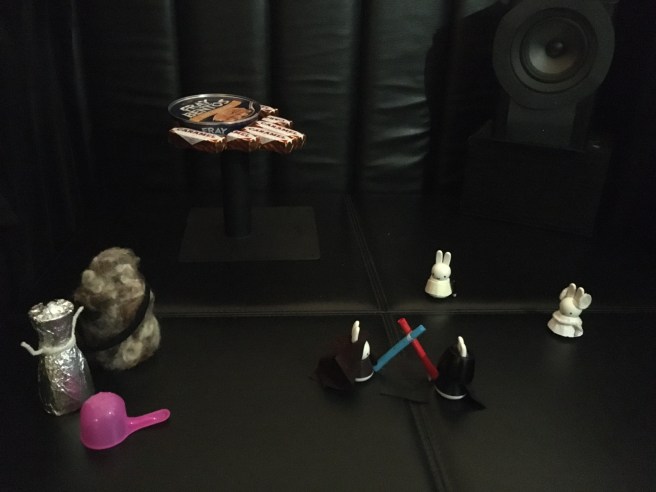
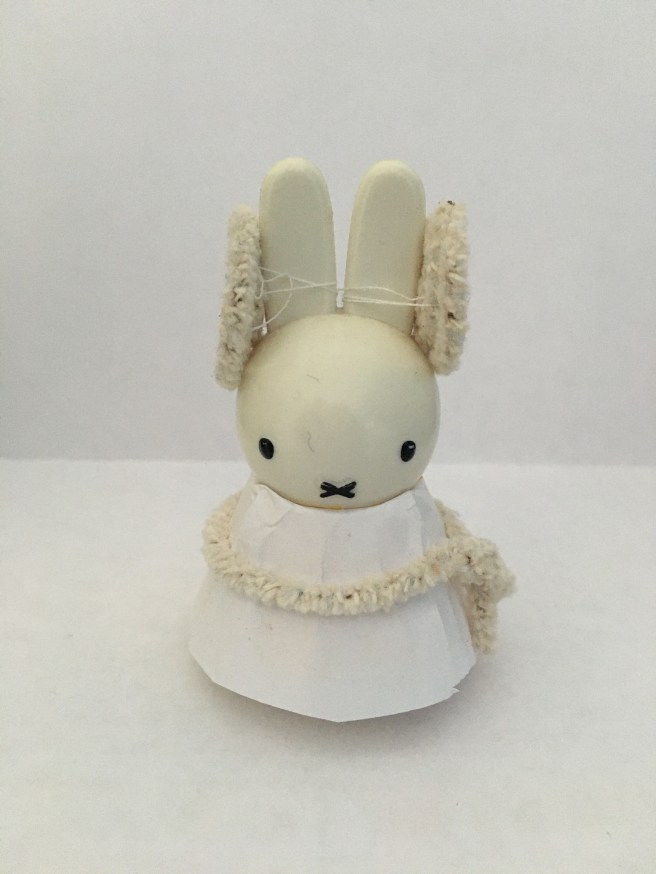
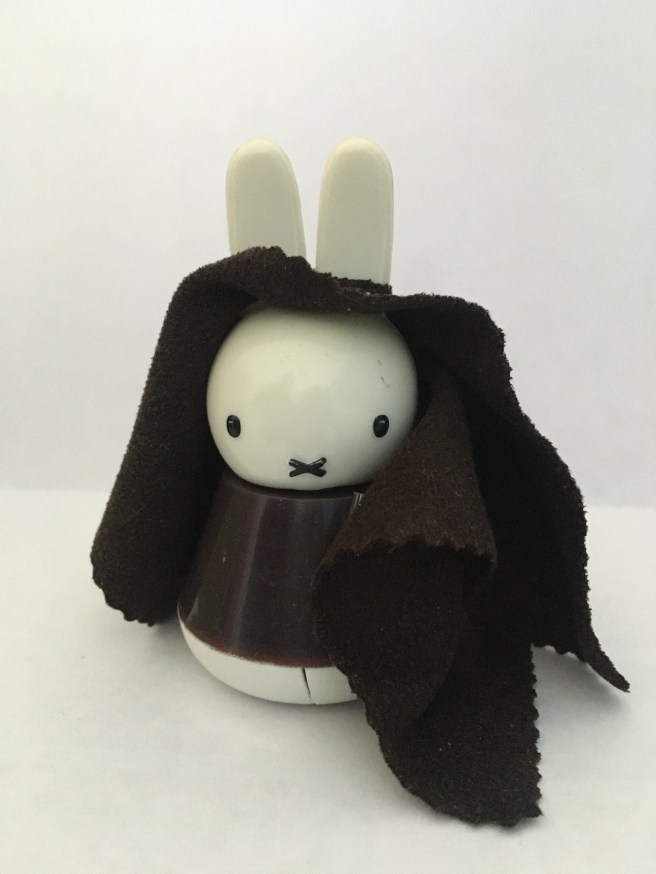
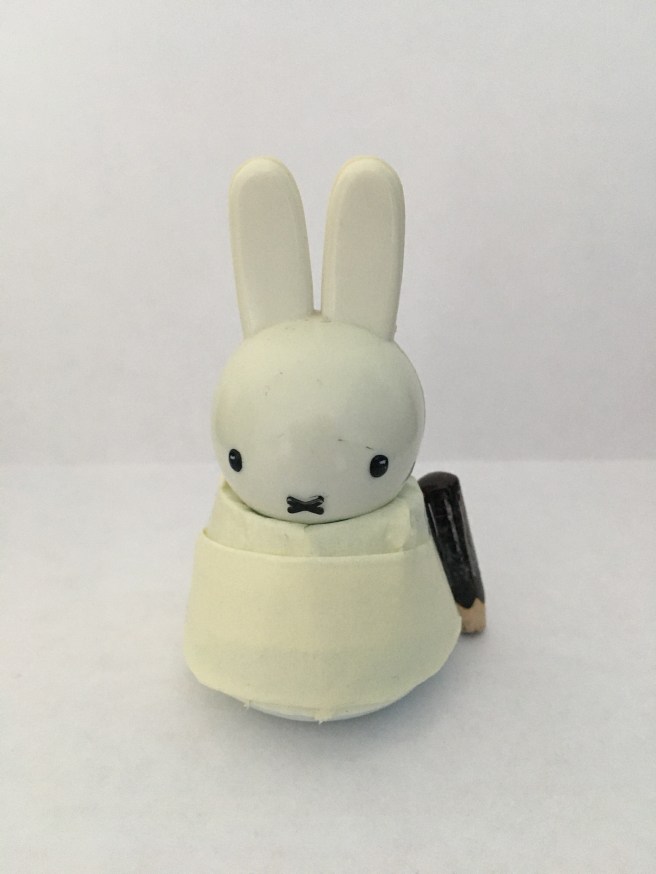
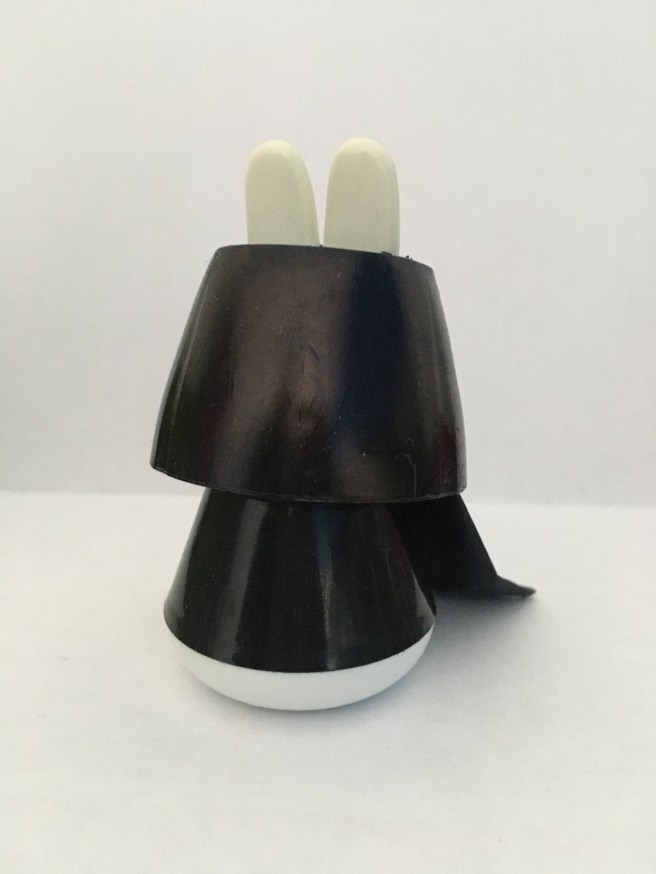
Given that 4 May is celebrated by some as Star Wars Day, what better way of wishing people well and urging them to keep strong during lockdown than “May the Fourth be with you”? As a result, I decided to create my very own Star Wars scene involving Miffy and a few other trusty friends. Who knew that a Fray Bentos meat pie, a Vanish stain remover dispenser, a pepper mill, a cleaning cloth for a pair of spectacles, the lid from a roll-on deodorant, some tin foil, some wool insulation and a load of pipe cleaners and Tunnock’s caramel wafers featured in an epic battle between good and evil a long time ago in a galaxy far, far away?
Top tips
In case you are thinking of trying something creative but don’t know where to start, here are my top tips.
- You do have a voice and you can use it. It might not be a voice in the conventional sense, but that doesn’t mean you don’t have one and that it isn’t a way of expressing yourself.
- You do have something worth saying. You just need to practise different ways of saying it and get used to expressing yourself.
- It doesn’t have to be perfect, or even that good, as long as it gives you pleasure to do.
- It doesn’t matter what anybody else thinks. Do it for your benefit, not somebody else’s.
- Do what you want. As long as you aren’t defaming anybody else or doing something illegal/unlawful, it really doesn’t matter (I have to say that – after all, I am still a lawyer).
- Let yourself go and get into a really silly frame of mind.
- HAVE FUN!

 What I learned today...
The reassuring news is that everyone is creative when born – think about kids in the playground with their imaginary friends and fantasy worlds! In a former life I was trained as a creative facilitator and here comes the science bit: as we grow up, we store received information from society and our experiences which fills up the left hand side of our brains – and tends to be cautionary or negative (don’t do that, you can’t do that, if you do that it will hurt!) and so on. What’s great to see is that you’re releasing that right brain activity which then becomes more creative. So keep dressing up Miffy (& him indoors?!) and let that creativity run free!!
As the saying goes (roughly): We don’t stop playing because we get old, we grow old because we stop playing!
LikeLike
Thanks Rona!! Much appreciated! G xx
LikeLike